
Last updated November 16, 2026
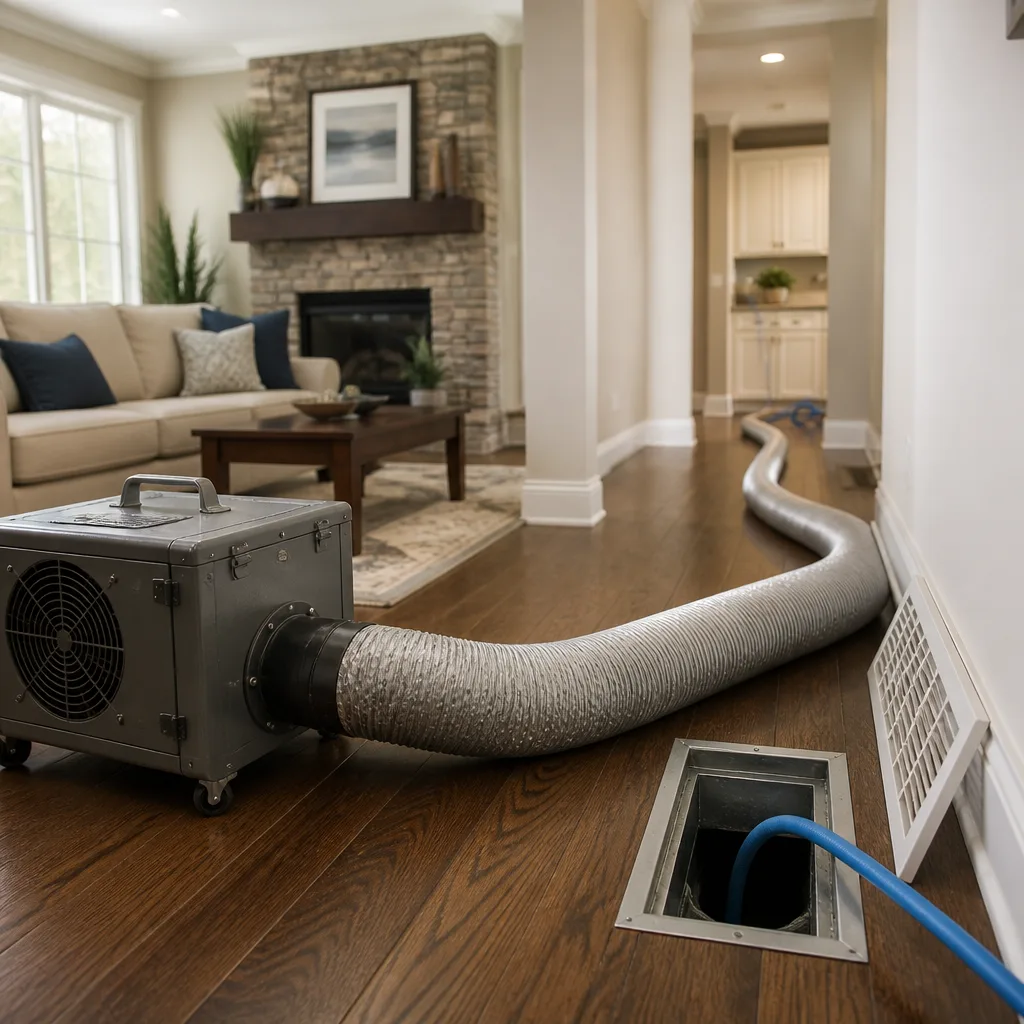 Whole-home duct cleaning
 Dryer vent cleaning
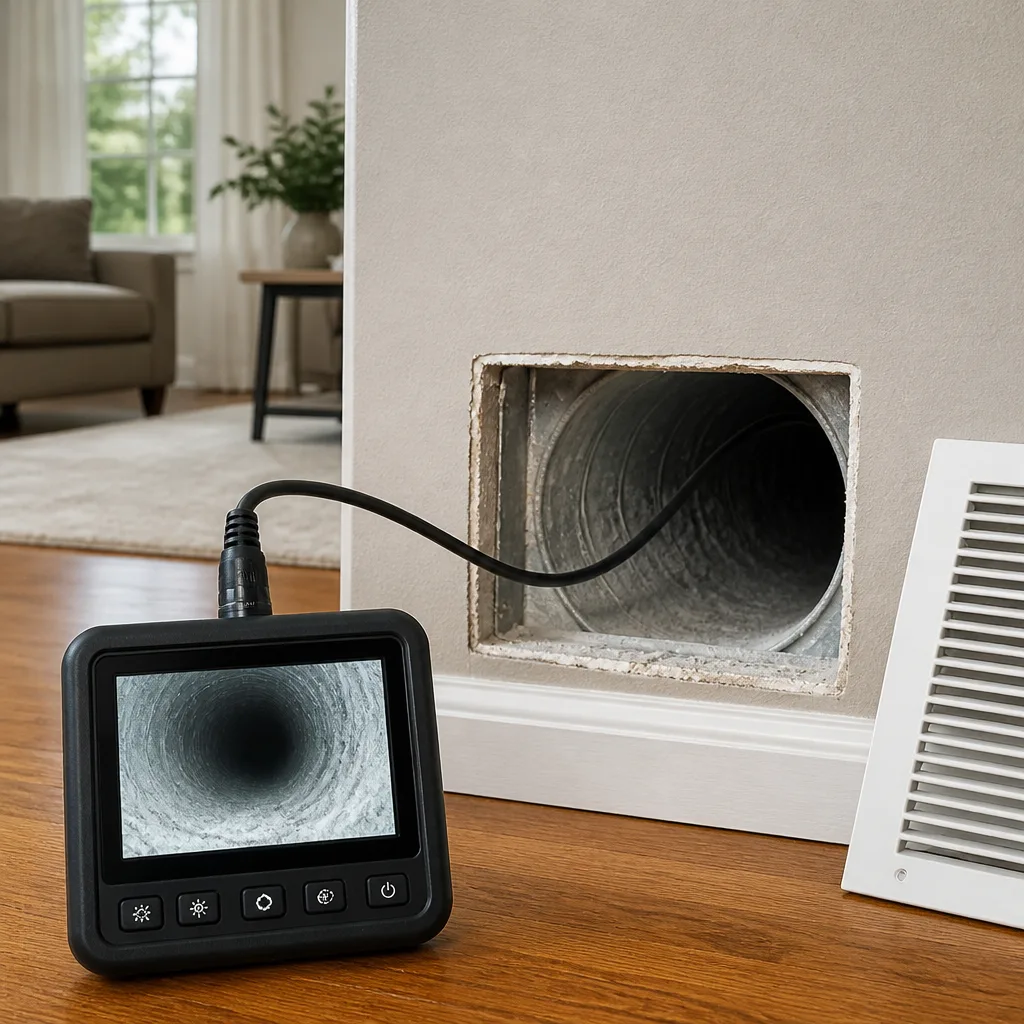 Camera inspection
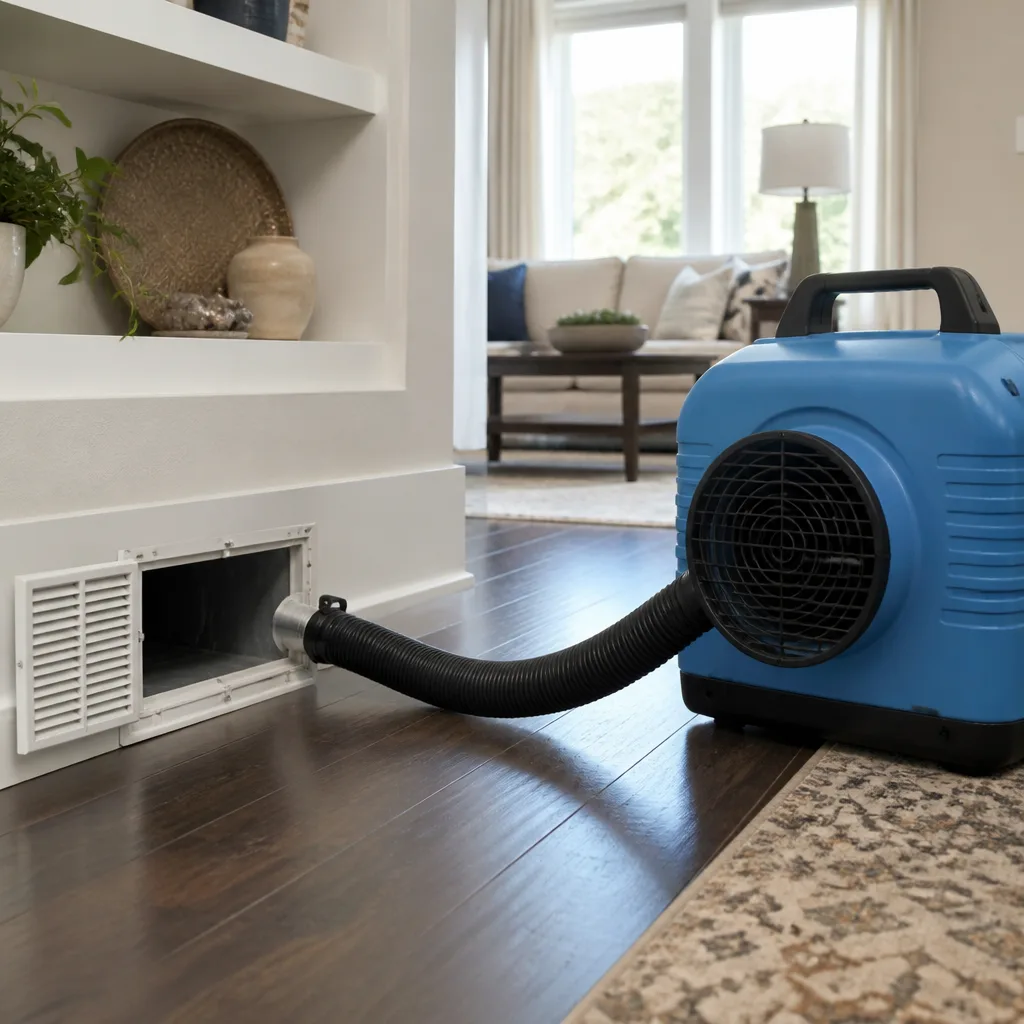 Sanitizing & deodorizing
Whole-system duct and dryer vent check with before-and-after photos - you see exactly what came out of your vents
That "$99 whole-house special" is a bait ad - the real number appears once they are in your hallway, or the "clean" is a shop-vac at the register. We photograph the inside of your ducts before and after instead.
Air Duct Cleaning Warning Signs: A Georgetown Homeowner’s Reference Guide
Most homeowners misdiagnose duct problems. The musty smell gets blamed on the weather, the dust on the furniture, the uneven room on a lazy thermostat. That misreading leads to the wrong fix, and the wrong fix costs money without solving anything. Here’s the correction: your duct system leaves evidence, and it leaves it in predictable places. This guide covers that evidence – what musty, burning, and chemical odors actually point to inside the ductwork, why dust returns days after you wipe a surface down, what dark staining around a register is really telling you, and why Georgetown’s active remodeling market creates a duct problem most checklists miss entirely. You’ll learn how to tell a duct issue from an HVAC issue before you spend a dollar on either.
Quick Answer
The main air duct cleaning warning signs in Georgetown are persistent odors when the system runs, dust that reappears on surfaces within days of cleaning, uneven room temperatures, visible dark staining around supply registers, and unusual debris after renovations. Any one of these can point to contamination, a duct disconnection, or a gap that’s pulling unfiltered air into your system. The reliable way to tell a duct problem from an HVAC problem is to check whether the symptom follows the airflow. If it does, the ducts are the place to look first.
Styles & brands we work with
- Whole-home duct cleaning
- Dryer vent cleaning
- Camera inspection
- Sanitizing & deodorizing
Table of Contents
- The Smell Index: What Odors Tell You About Your Ducts
- Dust Returning Within Days: Furniture Dust vs. Register Blowout
- Uneven Room Temperatures as a Duct Symptom
- What Dark Staining Around Supply Registers Actually Means
- Post-Renovation Warning Signs in Georgetown
- Why Flex Duct Holds Onto Debris Longer
- How a Professional Duct Inspection Actually Works
- Cleaning vs. Repair: Knowing Which One You Need
The Smell Index: What Odors Tell You About Your Ducts
A smell that arrives exactly when the air handler kicks on is a smell that lives in the duct system, not in the room. That’s the single most useful distinction you can make on your own, and it’s the one most homeowners skip. Air fresheners and candles mask the signal, which is the opposite of helpful. Each type of odor maps to a different condition on the interior surfaces of the ductwork.
Musty or damp-earth smell. This is the most common one, and it usually points to moisture sitting on a surface that stays cool and dark. Flex duct in a hot Texas attic sees temperature swings big enough to condense moisture on the inside wall of the duct where it meets a cooler stretch of run. Once a surface stays damp, biological growth establishes itself and the blower sends that smell into every room it feeds. The smell gets stronger in the first minute or two of a cycle, which is a strong clue that the source is in the duct, not in the room.
Burning or hot-dust smell. A faint warm-dust smell when the heat first comes on in the fall is normal and fades. A smell that persists into the run cycle, or that smells acrid rather than dusty, deserves a technician’s attention quickly. It can point to a component issue, and it can also mean debris is sitting close enough to the heat exchanger to scorch. Don’t wait on this one.
Chemical or solvent smell. This one is often a renovation leftover. Adhesives, paints, caulks, and sealants off-gas, and your return system pulls that air through the ducts, where vapor can settle on duct walls and interior insulation. A chemical smell that lingers weeks after a project wraps is a sign the system captured something it hasn’t released.
- Smell arrives with airflow and fades when the system stops: source is very likely inside the duct system.
- Smell is strongest in one room: check that branch run first, including the boot and the register box.
- Smell is strongest in every room: check the main trunk and the air handler connection.
- Smell is present even when the system is off: look beyond the ducts before calling a duct specialist.
When a musty smell persists through a full season, air duct cleaning can confirm whether the source is duct contamination or something in the air handler itself. That distinction matters because the fix is different for each.
Dust Returning Within Days: Furniture Dust vs. Register Blowout
Dust on a tablecloth after a week is normal housekeeping. Dust reappearing on the same surface within 48 to 72 hours of a full wipe-down is a signal about where the dust is coming from, and it’s usually one of two places. Learning to test which one saves you from cleaning the same shelf forever.
Furniture dust is settled dust. It’s finer, more evenly distributed, and shows up on horizontal surfaces across the whole house at roughly the same rate. It responds to a HEPA vacuum and stays gone for a while. Register blowout is different. It’s dust being pushed into the room from the supply boot, and it leaves a signature: a fine film concentrated near the register, dust streaks on the ceiling fan blades directly downstream, and a visible puff you can sometimes see against a dark curtain when the system starts.
Here’s a simple test you can run without tools. Tape a fresh white paper towel or coffee filter loosely over a supply register, capturing air that comes through but not blocking it entirely, and run the system for a day. A filter that picks up an even, light gray haze is normal. A filter that picks up visible black or dark buildup, or any grit, is telling you the duct run to that register is delivering debris. Repeat on a return grille in a different part of the house and compare.
If several registers all show heavy buildup, the problem is likely upstream – a gap in the return duct pulling attic or crawl air, a disconnection at a junction, or a filter that’s failing at the air handler. If only one register does it, that branch run is the place to look, and the fix is more likely a repair than a full cleaning.
One more clue worth noting: dust that has a gritty texture, or that sparkles slightly in direct light, is often insulation fiber. That’s the duct’s own material shedding into the airstream, and it usually means a damaged liner or a disconnected run. Gritty dust is worth walking outside to look at the condenser fan, too – it sometimes means the system is pulling from a space that isn’t conditioned.
Uneven Room Temperatures as a Duct Symptom
A room that never reaches the same temperature as the rest of the house is the most frequently misdiagnosed duct signal, because it’s the one that gets blamed on the HVAC unit itself. Homeowners hear “your system is undersized” and start shopping for equipment. In our experience, a room that’s consistently five to eight degrees off is more often a duct problem than a sizing problem, and the diagnostic step is simple.
Ask which direction the problem runs. A room that’s too hot in cooling season and also too cold in heating season is starved for airflow in both modes. A room that’s only ever cold probably isn’t getting enough supply air. A room that’s only ever hot may be getting too much supply air and not enough return. Those three patterns point at three different duct conditions.
- Check airflow at the register. Hold your palm or a tissue near each supply grille. A register with noticeably weaker flow than the rest of the house is the starting point.
- Close the door and check for a return path. Rooms with a closed door and no return grille pressurize, and supply air can’t get in because return air can’t get out. That’s often a duct design issue, not a duct cleaning issue.
- Look at the run. Flex duct that’s kinked, crushed, or routed through a tight turn loses a large share of its flow. A single sharp bend can choke a branch run.
- Check the junction. A run that’s come loose from a trunk collar blows air into the attic or crawl space instead of the room. That’s a disconnection, and it also pulls unfiltered air into the system.
- Verify the balancing damper. Some systems have adjustable dampers in the trunk, and they get nudged over time. A damper partly closed in one direction starves that branch.
A disconnection is worth fixing quickly. Duct repair closes gaps that let humid attic air and insulation particles into the airstream, and it restores the pressure balance the system was designed around. Cleaning alone won’t fix a room that’s starved for airflow. If you suspect an airflow problem rather than contamination, the place to start is duct cleaning in Georgetown – an inspection will tell you whether it’s a cleaning job or a repair job before anyone starts work.
What Dark Staining Around Supply Registers Actually Means
Dark staining around the edge of a supply register is common. It’s also routinely misread as mold. The honest answer is that most of it isn’t mold. It’s filtration staining – fine particles in the airstream collecting at the narrow gap between the register and the drywall, then darkening as they build up. The test to tell the two apart takes a minute and doesn’t require a lab.
Filtration staining is a shadow. Wipe it with a damp cloth and a little dish soap, and it comes off as gray-black residue on the cloth. It’s a surface deposit. Biological growth is a stain in the material. It spreads outward in irregular patches, it may look fuzzy or have a colored edge, and it stays visible after wiping because the material itself is discolored. Most of the time, the stain around a register is the first kind.
Where the distinction matters is upstream. Filtration staining around many registers at once is a clue about the whole house: the system is pulling more unfiltered air than it should. The most common source is a gap somewhere in the return duct or the air handler cabinet. Air bypasses the filter and travels the duct system unfiltered, and every register it reaches shows a bit of that deposit. That’s a real finding – and it’s the kind of thing a duct repair closes.
Moisture plus dark patching inside the duct, near the air handler or in the first section of supply trunk, is a different matter. If the home has had a high indoor humidity stretch, or a condensate issue the HVAC tech recently fixed, that’s worth having inspected rather than cleaned around. Tell the technician what you’ve seen so they know to examine the duct interior and not just the visible duct face.
What dark staining is not: a reason to panic, a reason to buy a fogging product at a hardware store, and a reason to accept a cleaning without an inspection. A duct system with genuine biological growth needs the source of moisture addressed before the ducts are cleaned, or the growth returns.
Post-Renovation Warning Signs in Georgetown
Georgetown has a busy remodeling and new-construction market, and the duct system catches most of the debris from it. A renovation next door or in the same house sends drywall dust, insulation fiber, sawdust, and construction debris into the airstream, and any flex duct that ran during the project will hold onto it. The three warning signs after a renovation are specific and they behave in predictable ways.
Drywall dust settling everywhere. Drywall dust is very fine and very white. It settles on surfaces within hours, and it doesn’t respond well to standard vacuuming because it gets airborne again as soon as it’s disturbed. If the house has had joint compound or sanded drywall work in the last few months and the dust won’t quit, the system is pulling it through the ductwork. Drywall dust is abrasive, which is why it’s worth removing rather than waiting out.
Insulation fiber in the return. Fiberglass visible in the return grille, or a return filter changing color to a dirty pink or yellow between cleanings, means insulation fiber from the attic or a duct liner is entering the system. That’s the grit that shows up on the paper-towel test described earlier. It’s also the debris most likely to clog an air handler coil, so it tends to show up as reduced cooling months later.
VOC off-gassing caught in the ducts. Paints, adhesives, sealants, and new cabinetry release chemicals that settle on duct interior surfaces. The smell lingers long after the project wraps because a running system is pulling that air through the same surfaces repeatedly. Cleaning removes the deposits; replacing a filter doesn’t.
- Renovation in the last 6 months, even in a different part of the house: worth an inspection.
- New construction in the neighborhood, followed by gritty dust: worth an inspection.
- Attic insulation work, blown-in or replaced: check the return side of the system first.
- HVAC equipment swapped during the remodel: the new install may have left debris in the plenum.
Ventilation during construction is the best prevention. If the project is done and the dust won’t settle, that’s the point to call. If you’re a landlord or property manager, having a documented inspection on file after a renovation is worth the time.
Why Flex Duct Holds Onto Debris Longer
Flex duct is common in Georgetown homes – it’s inexpensive, quick to install, and forgiving of the attic’s layout. It’s also less forgiving of debris, and knowing why matters for how you clean it. Flex duct’s interior is a spiral corrugated liner, not a smooth sheet metal run. That corrugation creates ridges where debris settles, and the ridges don’t release material easily once it’s packed in by airstream pressure over years.
A shop vac or a consumer-grade machine running along a flex duct hits the ridges and skips the valleys. Contractor-grade equipment works differently. A rotary-brush system like the Rotobrush line agitates the duct wall as it moves through the run, which is what actually removes debris from a corrugated liner, and a high-capacity extraction system like the Nikro line pulls the loosened material out with enough suction to clear it rather than disturb it back into the airstream. That’s the difference between a duct that looks clean and a duct that is clean.
Flex duct also sags. A run that has dropped under its own weight forms a low spot where debris accumulates and moisture condenses. Once that happens, no cleaning machine will fully flatten the sag, and a run that’s damaged or badly sagging may need replacement. That’s an honest finding a technician should be willing to give you instead of quoting a cleaning that won’t last.
Want to see whether your flex runs are actually moving air? Check the paper-towel test on a register far from the air handler, then compare to one near it. A big drop-off in flow between the two often points to a long flex run with a sag or a kink, not a dirty filter. A Georgetown technician can trace the run and find where the flow is lost.
How a Professional Duct Inspection Actually Works
A useful duct inspection is methodical, and it looks at more than the duct surfaces. What you should expect: an assessment of the supply side, the return side, the air handler connection, the filter and filter housing, and the register and grille fittings. The point is to establish what the duct system is doing before anyone quotes a cleaning.
- Intake air assessment. The technician checks where the return is pulling from and whether the filter is seated and sized correctly. A return pulling attic air is a real finding that a cleaning alone won’t fix.
- Visual inspection of accessible runs. Supply registers come off, a camera can be run down longer runs, and the technician looks for debris type, moisture, disconnections, and damaged liner.
- Airflow measurement at representative registers. Comparing flow at a near register to a far one reveals whether the system is balanced or a run is starved.
- Air handler connection check. The cabinet and plenum are the most common places to find a gap that bypasses the filter. A smoking gun for filtration staining shows up here.
- System component assessment. If the home has humidification, dehumidification, or a whole-home air quality system, the technician should be able to tell you what’s there. Familiarity with Honeywell and Aprilaire components matters here – many duct-cleaning operators can’t evaluate these components and skip them.
- Written findings. A useful inspection produces a written summary of what’s there, what’s not, and what (if anything) needs repair before cleaning.
During the actual cleaning, look for negative-air containment. Professional crews set up filtration equipment like Abatement Technologies units to hold the work area under negative pressure, so the debris loosened during cleaning goes into the collection system and not into your living room. If a quote doesn’t mention containment, ask about it before you book.
For an inspection, call (844) 560-6431. We answer 24/7. Fast dispatch from 7am to 7pm, Sunday through Friday.
Cleaning vs. Repair: Knowing Which One You Need
The honest split is this: cleaning removes accumulated debris and contamination, repair restores the system’s ability to move filtered air to the right places. Most homes with something wrong need one, some need both, and a few need repair only. Misreading which one you need is where most homeowners spend money without solving the problem.
Signs the job is cleaning: debris visible at registers, a smell tied to airflow, a renovation in the recent past, or a paper-towel test showing heavy buildup at multiple registers with no gaps found. In these cases the duct system is doing its job but carrying material it shouldn’t.
Signs the job is repair: a room that’s consistently off in temperature, filtration staining concentrated where a gap is suspected, a duct run visibly disconnected or crushed in the attic, visible insulation fiber in the return, or a paper-towel test that shows one register behaving very differently from the rest. In these cases the problem is the system’s structure, and cleaning around it won’t fix anything.
Signs the job is both: the most common case is a renovation that pulled debris in through a gap. You can’t clean properly until the gap is closed, and you can’t let the contamination sit until you clean. In those cases the repair comes first, then the cleaning. Many duct-cleaning-only operators can’t close the gap, which is why “we repair what other crews clean around” is a differentiator rather than a marketing line. If your home needs dryer vent cleaning too, that’s a separate fire-safety service and should be assessed independently.
One more service in the same visit worth knowing about: dryer vent cleaning. A clogged dryer vent is a documented residential fire risk, and the warning signs differ from the duct signs above (longer dry times, a hot dryer door, lint around the vent hood outside). Treat it as its own checklist item, not an upsell.
Common Mistakes to Avoid
- Buying a cleaning to fix an airflow problem. A starved room won’t improve if the underlying issue is a disconnected run or a closed damper. Get the inspection first, then decide whether it’s a cleaning or a repair.
- Blaming the HVAC equipment too early. “Undersized system” is a common guess for a room that’s five to eight degrees off. The airflow pattern is the thing to check first, because it’s far less expensive to diagnose and far cheaper to fix.
- Using a fogging product or air freshener to mask a smell. The musty smell is a signal about a surface condition. Fogging doesn’t remove the surface and can add a resin deposit to the duct interior that makes the next cleaning harder.
- Skipping an inspection after a renovation. Georgetown renovates a lot of homes, and every project drops debris into the ductwork. A cleaning with a written inspection prevents the scenario where the crew cleans the dust but leaves the gap that keeps pulling more in.
- Assuming the stain is mold. Most dark staining around a register is filtration staining, which wipes off as surface deposit. Treating it as a biohazard can lead to unnecessary expense, and treating actual growth as a stain can let a moisture problem persist.
- Having the ducts cleaned before fixing a moisture source. If condensation is forming in a duct run, cleaning the debris without correcting the cause means the problem returns. Fix the moisture first.
- Booking the cheapest quote without asking about equipment or containment. A low-bid cleaning that doesn’t use rotary agitation and high-capacity extraction on flex duct, and that doesn’t contain debris under negative pressure, can leave more material in the air than it removes. Ask what equipment is used.
See the difference
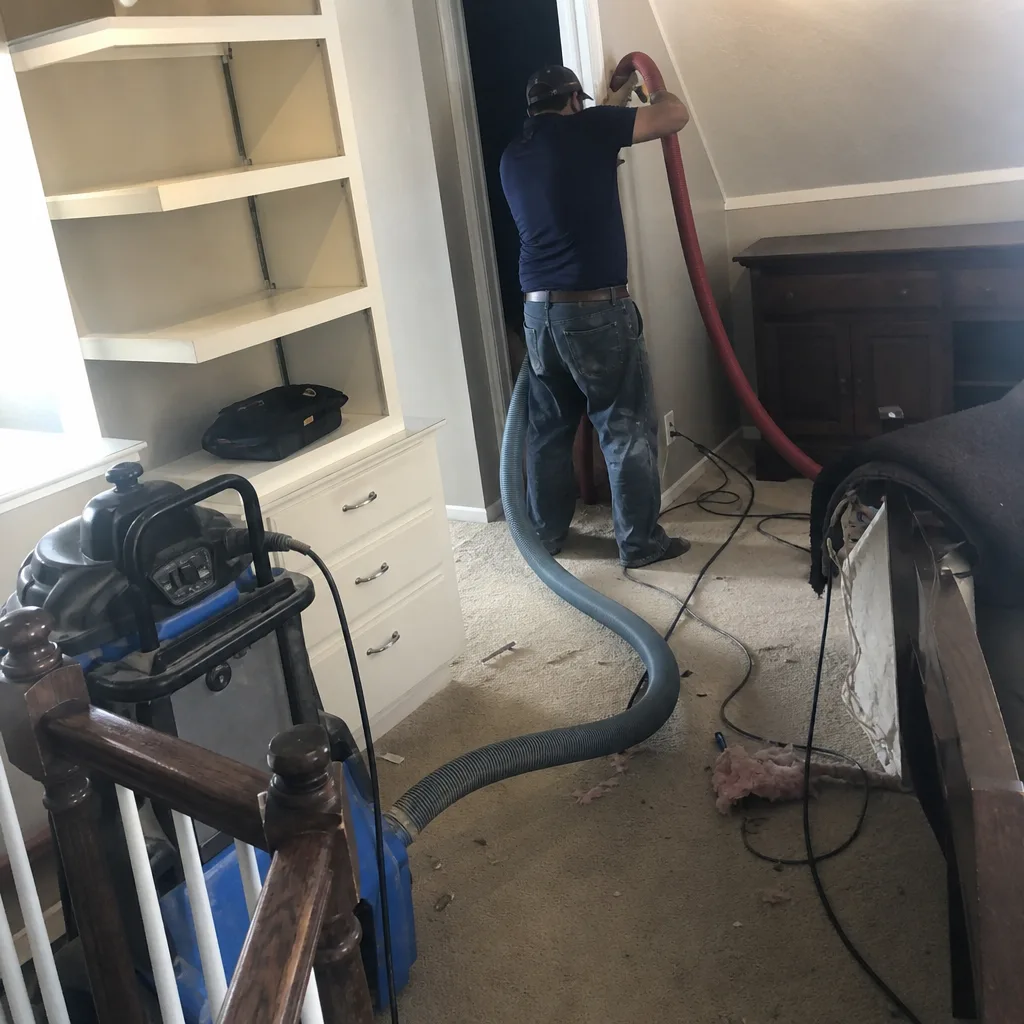 Before
 After
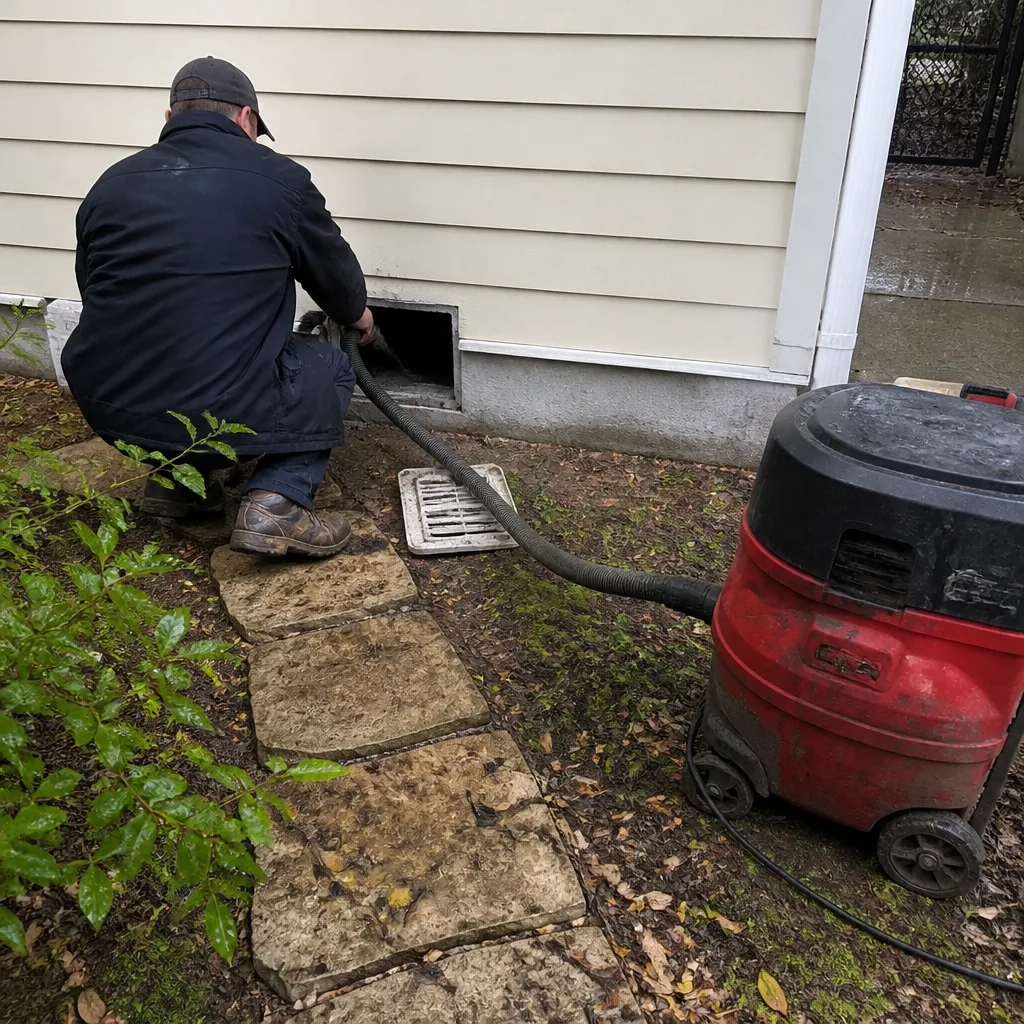 Before
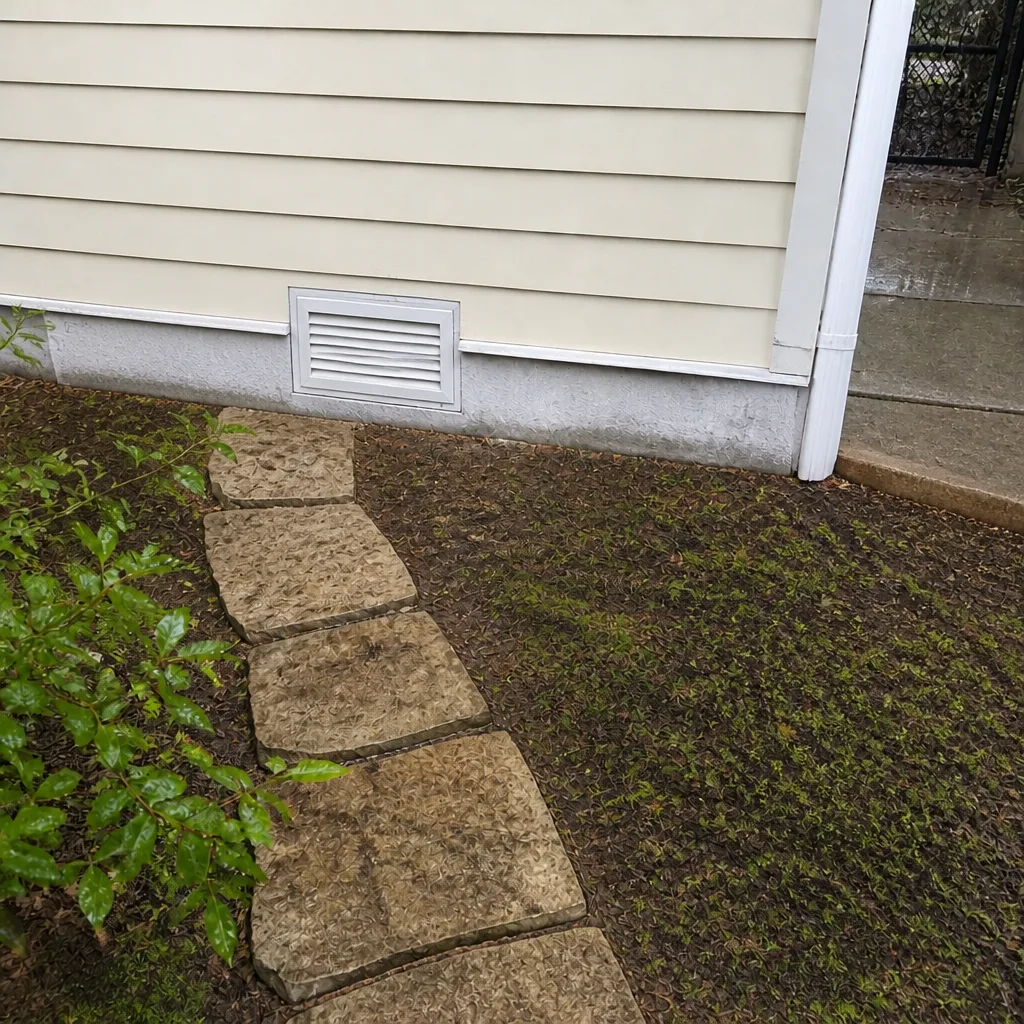 After
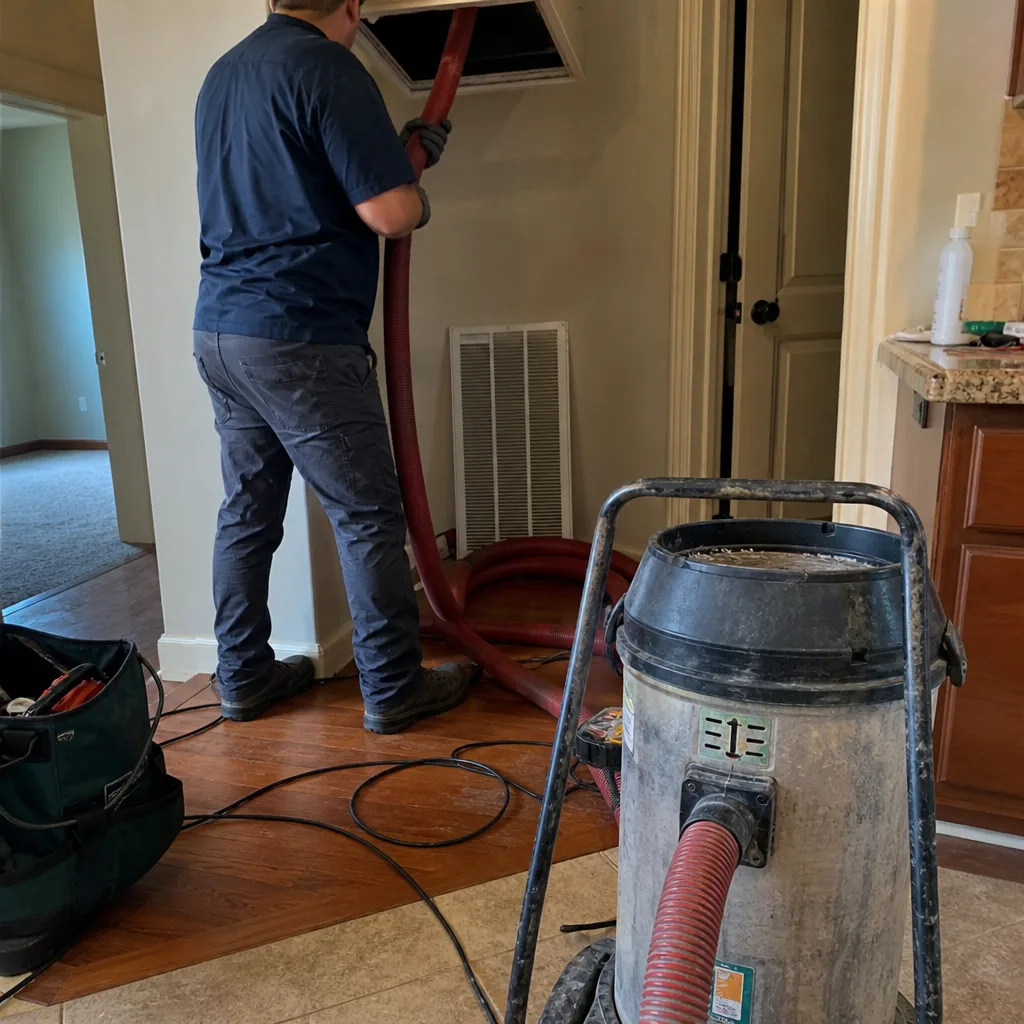 Before
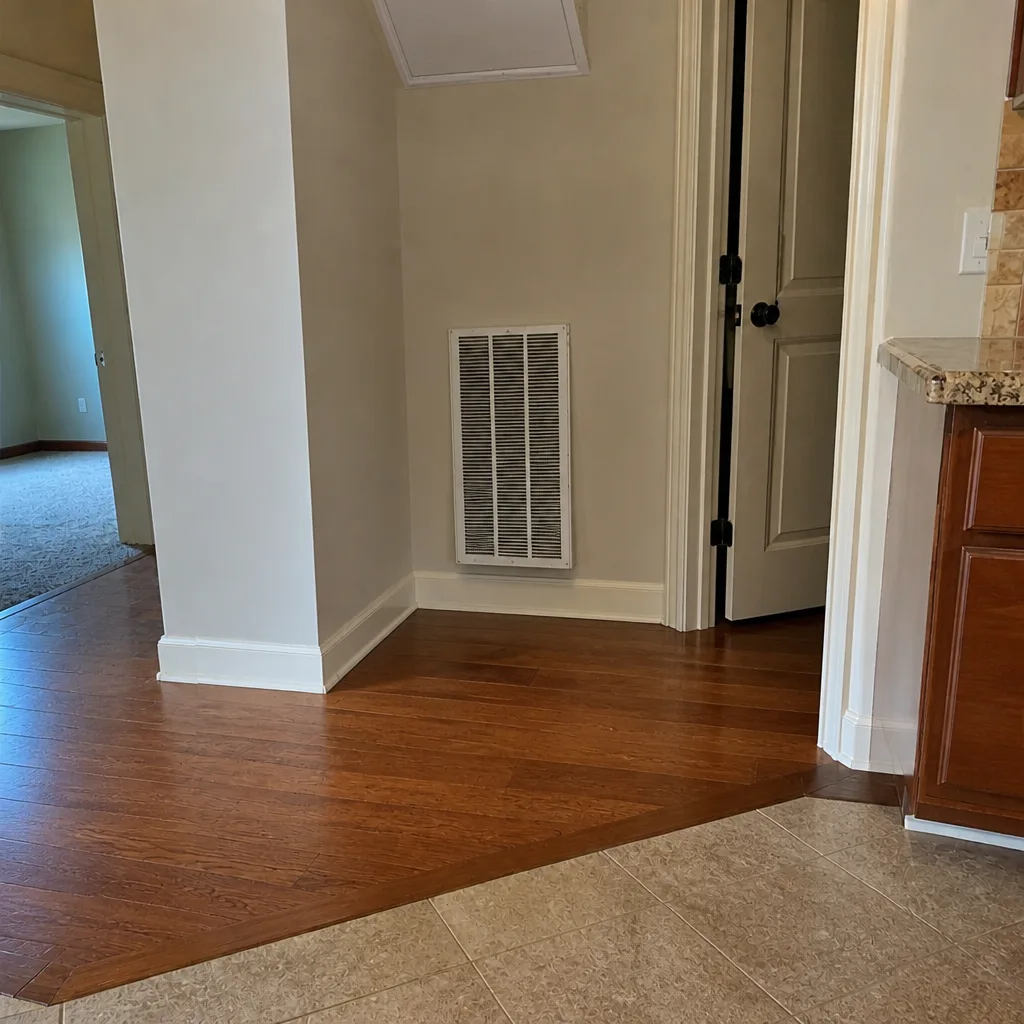 After
When to Call a Professional
Call when the evidence points in the same direction twice. If the musty smell comes back after a cleaning, if dust returns to a wiped surface within a few days, if a room stays five-plus degrees off and you’ve already checked the filter, or if a renovation pushed debris into the system and the dust hasn’t settled, that’s the point for an inspection. A burning smell that persists during the run cycle, or visible insulation fiber in the return, warrant a call sooner rather than later. If the problem is visible debris at the registers after a project, or a dryer that’s taking much longer to dry clothes, those are straightforward calls. Duct Cleaning Georgetown offers free estimates in Georgetown – call (844) 560-6431. We answer 24/7. Fast dispatch from 7am to 7pm, Sunday through Friday.
Frequently Asked Questions
Most homes don’t need a set interval – cleaning is warranted when the warning signs show up, not on a calendar. A renovation, a new pet, a moisture event, or a long stretch of visible dust at the registers are all legitimate triggers, and a home with none of those can go many years without a cleaning. Our technicians have up to experience assessing what’s actually in the system rather than quoting a schedule. Call (844) 560-6431 for an honest assessment – estimates are free.
Usually, yes: a smell that arrives with airflow is strong evidence the source is inside the duct system. The most common cause is moisture on a cool surface inside a flex duct run, which allows growth to establish. It’s worth confirming with an inspection before treating it, because the fix depends on whether the moisture source is the duct itself or the air handler. Call (844) 560-6431 and we’ll walk through what you’re noticing.
Dirty ducts can contribute, but a room that’s consistently five to eight degrees off is more often a duct disconnection, a crushed flex run, or a closed damper than a cleaning issue. It’s worth checking airflow at the register and the return path before assuming sizing. An inspection separates the two quickly. Call (844) 560-6431 for a free estimate.
Most often it’s filtration staining, not mold – fine particles collecting in the gap between the register and the wall, which wipes off as a gray residue. If the stain is in the material rather than on it, or if it’s paired with a musty smell, it’s worth an inspection to check for a moisture source upstream. Call (844) 560-6431 to schedule one – estimates are free.
Usually yes if the system ran during construction. Drywall dust, insulation fiber, and construction debris settle in the ductwork, and flex duct holds onto them longer than sheet metal because of its corrugated liner. Drywall dust is abrasive and worth removing rather than waiting out. Call (844) 560-6431 and we’ll inspect the system before quoting any work.
You should get before-and-after photos of your own duct system, a written summary of what was found, and a technician willing to explain the equipment used. If the quote was for a per-vent price with no inspection first, or if the crew used a shop vac rather than rotary-brush and high-capacity extraction equipment, the work is unlikely to have addressed what’s actually in the ducts. Call (844) 560-6431 for an estimate with a written breakdown.
The Bottom Line
The signals in this guide all come back to one idea: your duct system tells you what’s wrong if you know where to look. Odors that arrive with airflow point inside the duct. Dust that returns within days points to a source, not a cleaning habit. Uneven rooms point at airflow, not sizing. Stains point at filtration, not necessarily mold. And a recent renovation points at debris that flex duct holds onto. Read the signal first, get an inspection before a quote, and decide between cleaning and repair on the evidence. That’s how you spend money on the actual problem.
To have your Georgetown home’s duct system inspected by a technician who uses contractor-grade equipment and explains what was found, call (844) 560-6431. We answer 24/7. Fast dispatch from 7am to 7pm, Sunday through Friday.
Written by the team at Duct Cleaning Georgetown.