
Last updated November 16, 2026
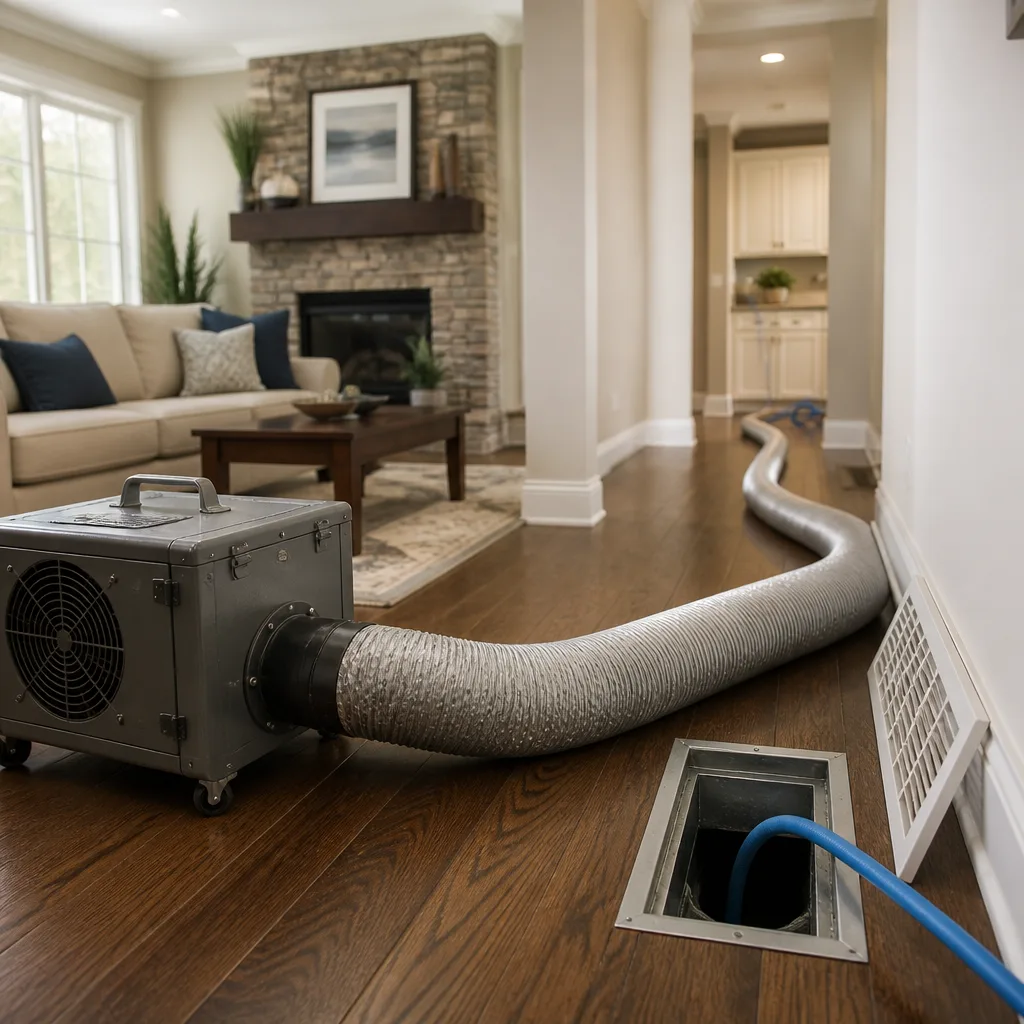 Whole-home duct cleaning
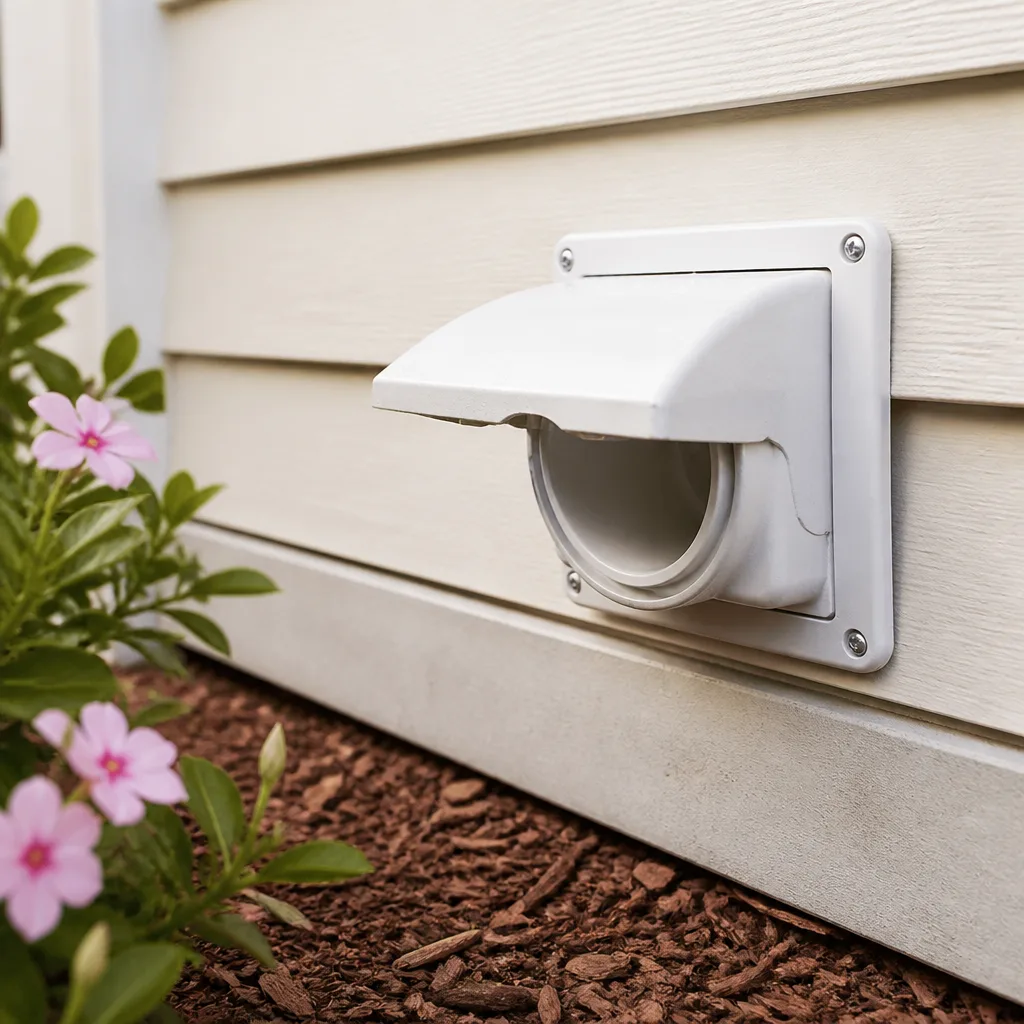 Dryer vent cleaning
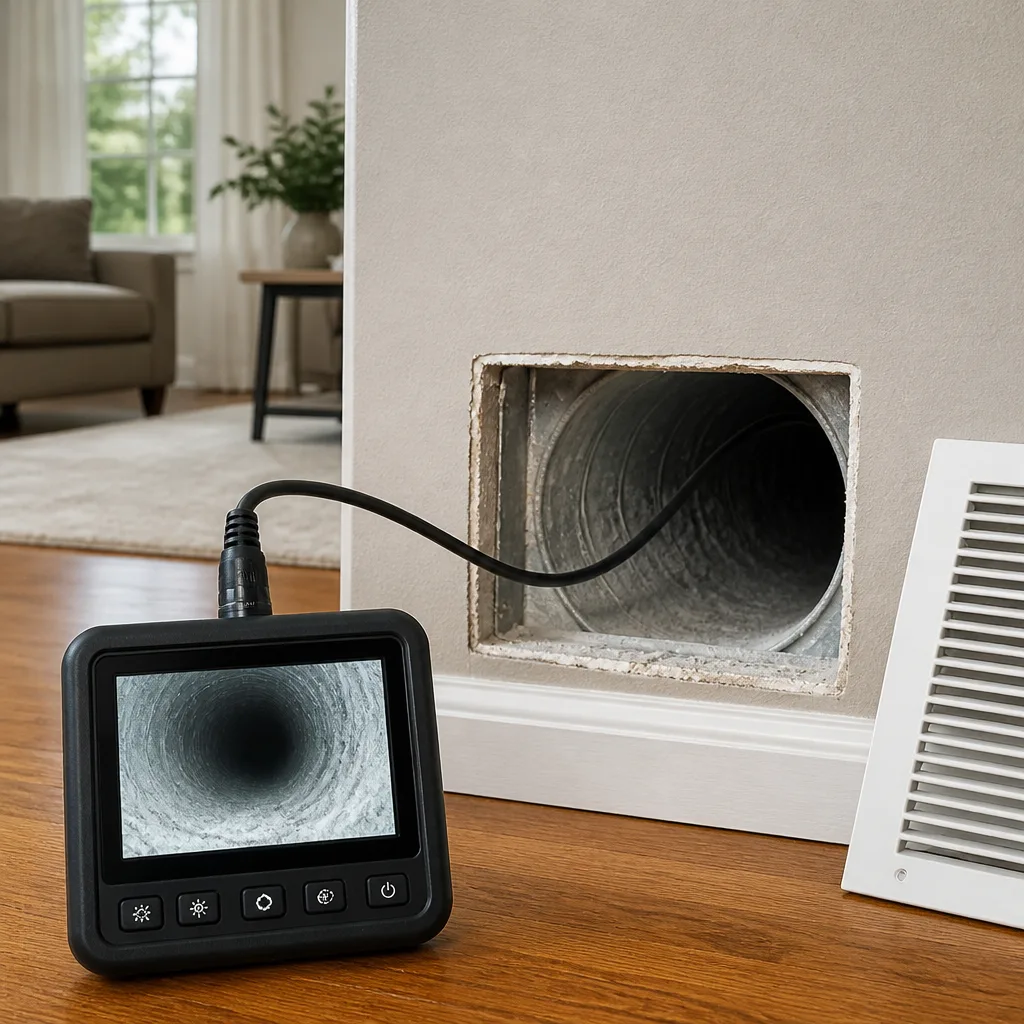 Camera inspection
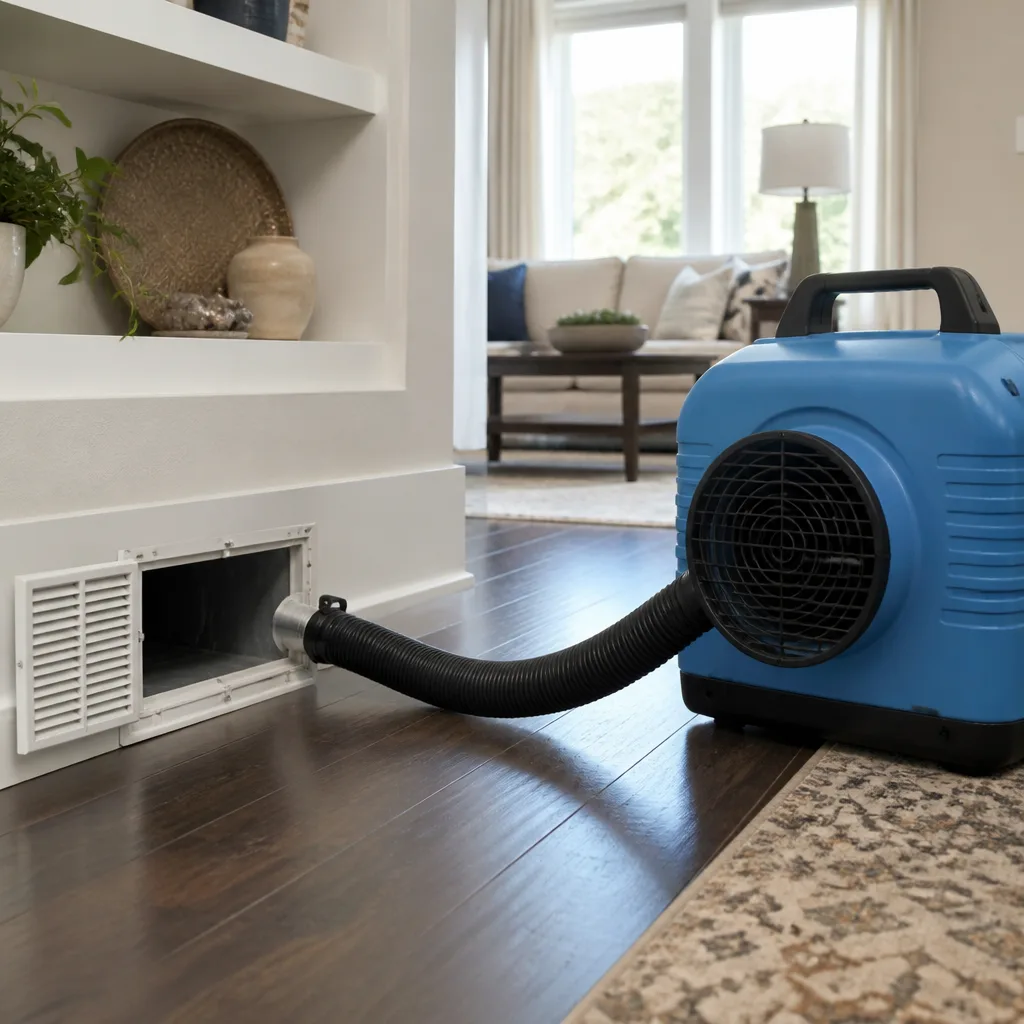 Sanitizing & deodorizing
Whole-system duct and dryer vent check with before-and-after photos - you see exactly what came out of your vents
That "$99 whole-house special" is a bait ad - the real number appears once they are in your hallway, or the "clean" is a shop-vac at the register. We photograph the inside of your ducts before and after instead.
DIY vs Professional Air Duct Cleaning: The Georgetown Homeowner’s Decision Guide
Here’s the mechanical reason do-it-yourself duct cleaning has a ceiling, and it has nothing to do with courage or elbow grease. A shop vac hooked to a supply register blows air into the duct. The dust you loosen with a brush gets pushed deeper into the system, not pulled out of it. Professionals invert that relationship: they hold the branch line under negative pressure and pull material toward a collection point. This guide lays out the physics plainly, then draws the line between what a Georgetown homeowner can legitimately handle and where the equipment gap stops being negotiable.
Quick Answer
You can clean register covers, wash return grilles, change filters, and inspect ductwork yourself with a flashlight and a phone camera. What you can’t do without a negative-pressure vacuum pulled from the main trunk is extract the material living inside the duct runs. In Georgetown’s humid spring and fall shoulder seasons, sheet-metal ducts in attics and unconditioned chases collect a fine dust film that only a rotary brush paired with real suction will lift. DIY handles the surface; professional cleaning handles the system.
Styles & brands we work with
- Whole-home duct cleaning
- Dryer vent cleaning
- Camera inspection
- Sanitizing & deodorizing
Table of Contents
- The Negative Pressure Principle: Why Your Vacuum Pushes Dust Deeper
- What Homeowners Can Legitimately Do Themselves
- When DIY Cleaning Is Contraindicated
- The Tool Gap: What an $80 Brush Kit Actually Reaches
- How to Build a Scope of Work Before You Call Anyone
- What a Professional Cleaning Actually Involves
- Duct Repair: The Layer Most Crews Skip
- How Often Ducts Really Need Cleaning in Georgetown
The Negative Pressure Principle: Why Your Vacuum Pushes Dust Deeper
A vacuum cleaner works by creating lower pressure inside its hose than outside it. Air rushes toward the lower-pressure zone, carrying dust with it. That works beautifully when the vacuum’s intake is the only opening. In a duct system, the equation is different. A register is a small opening connected to a long, sealed channel. When you put a shop vac hose on that register and start brushing, the vacuum’s exhaust pressurizes the immediate area, and the loosened debris travels wherever the pressure gradient allows – often into the neighboring branch line or down toward the trunk.
Professional duct cleaning reverses the geometry. A high-volume negative-air unit connects at the main trunk or through a large access cut near the furnace plenum. The entire duct system becomes one long suction channel. Registers are then worked from the inside with a rotary brush, and the loosened material travels in one direction: toward the vacuum, away from the living space.
Three practical consequences follow from that difference:
- Capture direction. Negative pressure from the trunk pulls toward collection. Positive pressure from a register pushes toward the nearest escape.
- Debris containment. Professional setups run filtration and hold the home under light negative pressure during service, so the air in the living room doesn’t circulate through the work zone.
- Brush contact. A rotary brush driven by a flexible cable reaches and scours full perimeter walls of the duct. A hand brush on a short wand touches maybe a third of that surface.
That’s the whole argument in miniature. DIY isn’t dangerous. It’s structurally limited. In Georgetown homes built on pier-and-beam foundations with attic-mounted air handlers, the run from the return trunk to the farthest bedroom register can be 30 feet of flex duct with two elbows and a sag. A shop vac at the register has no mechanism to draw material out of that run.
What Homeowners Can Legitimately Do Themselves
DIY has real scope, and pretending otherwise damages trust. If you’re willing to spend an afternoon on a step stool, there’s genuine value in surface maintenance. Here’s what that work consists of:
- Remove and wash every register cover. Most residential grilles pop out with two screws or a small latch. Run them under warm water with dish soap, dry fully, and reinstall. You’ll be surprised how much visible film comes off.
- Wipe the interior of the register boot. The short sheet-metal box between the grille and the duct is reachable with a damp microfiber cloth. That’s the surface guests actually see and the dust they notice most.
- Vacuum return grilles from inside the living space. A standard vacuum with a brush attachment on the return face catches loose dust before it re-enters the air handler.
- Upgrade the filter to the highest MERV your air handler can handle without starving the system. Filter upgrades are the cheapest airflow improvement available, and they compound with cleaning rather than replacing it.
- Do a visual inspection with a flashlight and a phone camera. Pop the return grille, point the camera down the return, take a few photos with flash. Then do the same through each supply boot. You’re building a record, not cleaning anything yet.
What that work accomplishes: it caps the surface dust load, keeps visible grilles clean, and gives you documented evidence of what the interior of your ducts looks like. What it doesn’t accomplish: reduction in the settled dust inside the branch lines, removal of microbial growth, or anywhere near the airflow improvement a proper air duct cleaning delivers. In our experience the visible result after a register-and-grille DIY pass is real, and customers who call us afterward often say the ducts “looked clean” until we showed them the collection canister.
When DIY Cleaning Is Contraindicated
Some situations carry enough risk that DIY should not be attempted at all. These are not upsell triggers – they’re cases where surface cleaning can spread contamination rather than remove it.
- After mold remediation. If a remediation contractor has treated active mold in the air handler, coil, or a section of duct, the residual spores and dead material need to be removed with negative-air containment. Brushing a shop vac through those runs aerosolizes particles back into occupied rooms.
- After renovation or a major remodel. Drywall dust and construction debris settle into branch lines and the return trunk. That dust is fine, abrasive, and heavier than typical household dust, meaning a consumer vacuum’s filter loads up before the duct is anywhere near clean.
- Vermin intrusion. Rodent droppings in ductwork carry real health risk. Touch that with a brush and you create an aerosol you can’t see. Professional crews wear the right PPE, use HEPA filtration with Georgetown-appropriate containment, and can sanitize afterward.
- Damaged flex duct. A collapsed or torn inner liner is a hidden failure. Cleaning a compromised flex run can tear it further. This is where duct repair matters – a cleaning-only operator can’t fix what they’re brushing through.
- Water intrusion history. Any duct that has been wet and not professionally dried is a reservoir. Cleaning it without addressing the moisture source is wasted effort.
Georgetown’s spring humidity and the sharp temperature swing between an attic air handler and conditioned space means condensation on poorly insulated duct runs is not rare. If you see rust scale or staining inside a boot, stop and call. The ducts need drying and inspection before anything else happens.
The Tool Gap: What an $80 Brush Kit Actually Reaches
Consumer duct brush kits are useful tools sold honestly. The problem isn’t the brush; it’s the delivery system. These kits typically include a flexible rod or a short cable, a few round brush heads, and sometimes a drill adapter. Here’s what that reaches and where it stops:
- Reaches: straight runs from an open register up to about 10 feet, the inside face of register boots, and the immediate return neck if the grille is removed.
- Struggles with: any 90-degree turn tighter than the rod’s bend radius, transitions through a wye or boot, and anything past an elbow.
- Cannot reach: the main trunk (usually no accessible opening), the inside of the air handler above the coil, or duct runs without a nearby register.
- Cannot capture: loosened material – the brush dislodges it, and there’s no suction attached to the brush head.
Where the gap becomes non-negotiable is right at that last point. Professional equipment pairs the rotary action with continuous suction at the same end of the cable. Rotobrush rotary-brush systems are built as one integrated tool – brush, cable, and vacuum working in tandem. Nikro collection systems hold volume so the collected debris stays contained until it leaves the home. Abatement Technologies negative-air units keep the pressure differential maintained during service, so dislodged material flows toward the machine, not toward you. That’s the equipment gap in one sentence: capture, not just agitation.
A rotary brush also reaches full-perimeter contact, top and bottom, because it’s spinning against the duct walls. A hand brush drags against one side at a time. Over a 30-foot run, that difference in surface coverage is the difference between a duct that’s been wiped and a duct that’s been cleaned.
How to Build a Scope of Work Before You Call Anyone
The most useful DIY move in this whole guide isn’t cleaning – it’s inspection. If you document your ducts before you pick up the phone, the conversation with a professional moves from “we’ll see when we get there” to a scoped job with a written estimate you can evaluate.
- Photograph each register and return. Pop each grille, take one wide shot down the boot and one close-up of the interior sheet metal. Note the register location on the photo.
- Measure airflow at each supply register. Hold a strip of tissue or a piece of thin plastic against each grille. Note which registers move it strongly and which barely disturb it. Weak-airflow rooms are diagnostic of a blockage, a collapsed flex run, or a dirty coil – the technician needs to know which rooms to look at first.
- List every visible concern. Rust, moisture staining, dust plumes off the register on startup, a smell that returns when the fan kicks on, critter evidence, or visible mold. Write these down. Specificity gets you a specific estimate.
- Note where the air handler is. Attic, closet, or garage. Its location determines what the technician will want to inspect above and around it.
- Write down every register’s location by room and floor. Multi-story Georgetown homes often have surprising run lengths between the trunk and the far bedroom. A register count matters, and it’s a number the professional should collect from you on the phone, not from a coupon.
- Ask for the written scope before work starts. What gets brushed, what gets vacuumed, what gets sanitized (if any), and what happens to the return and the air handler. If the estimate is a flat coupon with no scope, you’re not looking at a plan; you’re looking at a starting price.
That’s the point of doing this walking-around work first. You’re not starting the conversation blind. You’re handing a professional a documented set of findings and asking them to walk you through what they’d do about each one.
What a Professional Cleaning Actually Involves
The best way to understand the difference is to see what a proper service looks like, step by step:
- Set up containment. Negative-air filtration is placed to hold the work zone under slight negative pressure. Anything loosened during cleaning flows toward the capture unit, not into the room.
- Connect the collection vacuum. A high-volume unit draws from the main trunk or through a plenum access so the whole duct system is one suction channel.
- Brush each branch line from inside. Rotary-brush systems push a spinning brush through each run. Debris breaks loose against the duct wall and moves toward the trunk under negative pressure.
- Work the main trunk and air handler. The plenum sides, the return drop, and the coil face are all reachable surfaces and get treated as part of the service.
- Address integrated air-quality components. Honeywell and Aprilaire equipment – media cabinets, humidifier bypasses, filtration frames – sit inside the air path. Familiarity with these components means the technician knows to service them without disturbing their function.
- Capture before-and-after photos. The internal condition of an accessible duct is documentable. If a provider can’t show you before-and-after images of your own system, ask why.
- Wash and reinstall grilles, verify airflow. A quick tissue test at each register after the work confirms what you can feel and shows the technician whether a weak register still needs a repair callback.
That last step connects to the third capability most duct cleaners don’t offer: repair. A loose joint, a separated flex run, a sagging branch with no support – each one compromises airflow as much as dirt does. Cleaning around a leak without fixing it is Duct Cleaning Georgetown work that comes back on the customer. We repair what other crews clean around, and that difference matters most in older Georgetown homes where duct support strapping and joint sealant have been out of sight for decades.
Duct Repair: The Layer Most Crews Skip
A duct system loses meaningful efficiency through leaks, not just through dirt. Every separated seam pulls attic air into the supply stream, and attic air in a Georgetown summer is the last thing you want mixed into conditioned air. Every sagging flex run creates its own sediment trap. Cleaning without repairing is polishing the pipes and ignoring the joints.
This is where the scope of a cleaning-only operator ends. Air duct repair as a standalone service closes the gap. The most common repair patterns include:
- Reconnecting separated flex runs at boot collars, where the inner liner has pulled away.
- Replacing a crushed or collapsed flex run where airflow has dropped to a trickle.
- Replacing or rehanging sagging branch lines so they run straight.
- Sealing plenum seams and trunk joints that have lost their mastic or foil tape.
- Repairing boot terminations where a register has pulled loose from the mud ring.
If you complete your DIY inspection and find a register with almost no airflow while the branches you can see look intact, the collapsed flex run above the ceiling is a likely answer. That’s a repair, not a cleaning, and the estimate should be scoped as such. Insist on it.
We also handle the third leg of the system: dryer vent cleaning. Lint accumulation in a dryer vent is a documented fire risk, and it’s the single most overlooked part of a home’s duct maintenance picture. It’s treated as its own safety checklist item, not as an add-on to an air duct job.
How Often Ducts Really Need Cleaning in Georgetown
Most homes don’t need an annual duct cleaning. The industry-standard guidance is a cleaning every 3 to 5 years for a typical household, with adjustments up or down depending on the conditions below. Some homes legitimately need shorter intervals; some can stretch much longer.
- Shorter intervals (2-3 years): pets in the home, allergy sufferers, recent renovation, or smokers in the household.
- Standard intervals (3-5 years): typical single-family home with a properly maintained filter.
- Longer intervals (6+ years): newer construction with sealed ductwork, no pets, and a properly filtered air handler.
- Condition-triggered rather than calendar-triggered: visible dust plumes from a register, a smell that returns when the fan runs, or a documented mold or vermin issue – clean when the condition exists, not on a schedule.
In our experience the strongest local signal is seasonal. The first weeks of air conditioning season in Georgetown send ducts from passive to pressurized. Sediment that has been sitting quietly in the return trunk all winter gets stirred and pushed into every room. If your house smells “dusty” in that first week of AC, it’s telling you something the calendar can’t. It’s telling you the settled load is high.
That’s also why a filter upgrade coupled with a cleaning beats a filter upgrade alone. Any filter is downstream of the ducts it protects. Clean ducts mean the air handler isn’t working to pressurize a system that’s already loaded with material.
Common Mistakes to Avoid
- Running the air handler while cleaning. A running fan redistributes every particle you loosen. Turn the system off at the thermostat before any register-level work, and keep it off until dust settles.
- Buying the coupon without asking for the scope. A low headline price with no written scope tells you nothing about what’s actually being cleaned. Ask for a written description of the work before you book.
- Using a shop vac as if it were a collection system. The physics explained above applies regardless of how powerful the vacuum is. Direction of capture, not horsepower, is what matters.
- Skipping the return side. Grandmother’s advice to vacuum the supply registers is fine, but the return is where the bulk of the settled load actually accumulates. Inspect there first.
- Ignoring a collapsed flex run in the attic. Weak airflow at one register combined with a clean filter is a strong signal of a physical duct problem, not just a dirty duct. Cleaning without repair will not fix airflow.
- Cleaning ducts after mold remediation without containment. Mold spores need to be captured, not agitated. This is the single situation where DIY is actively counterproductive.
- Over-filtering to try to compensate for dirty ducts. A filter with too high a MERV on a standard air handler restricts airflow enough to stress the system. Match the filter to the equipment, not to the problem.
See the difference
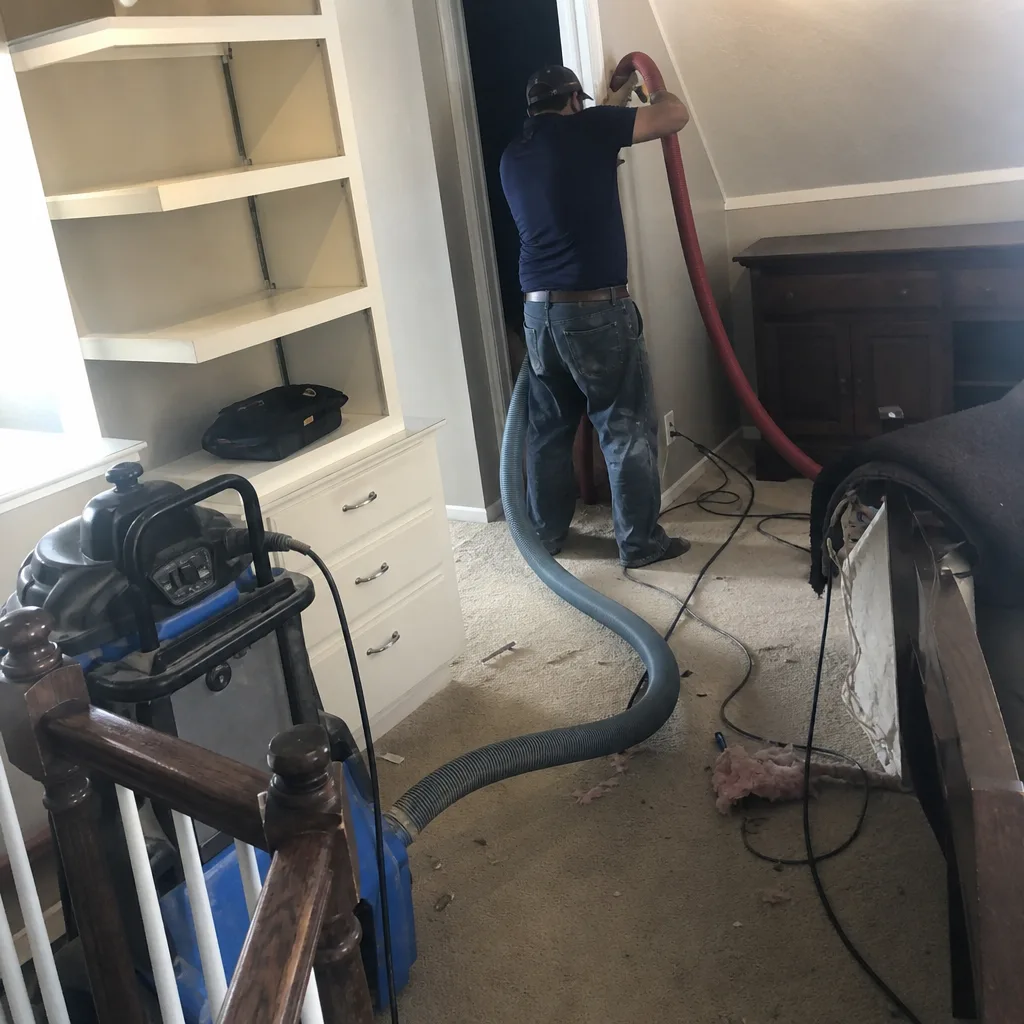 Before
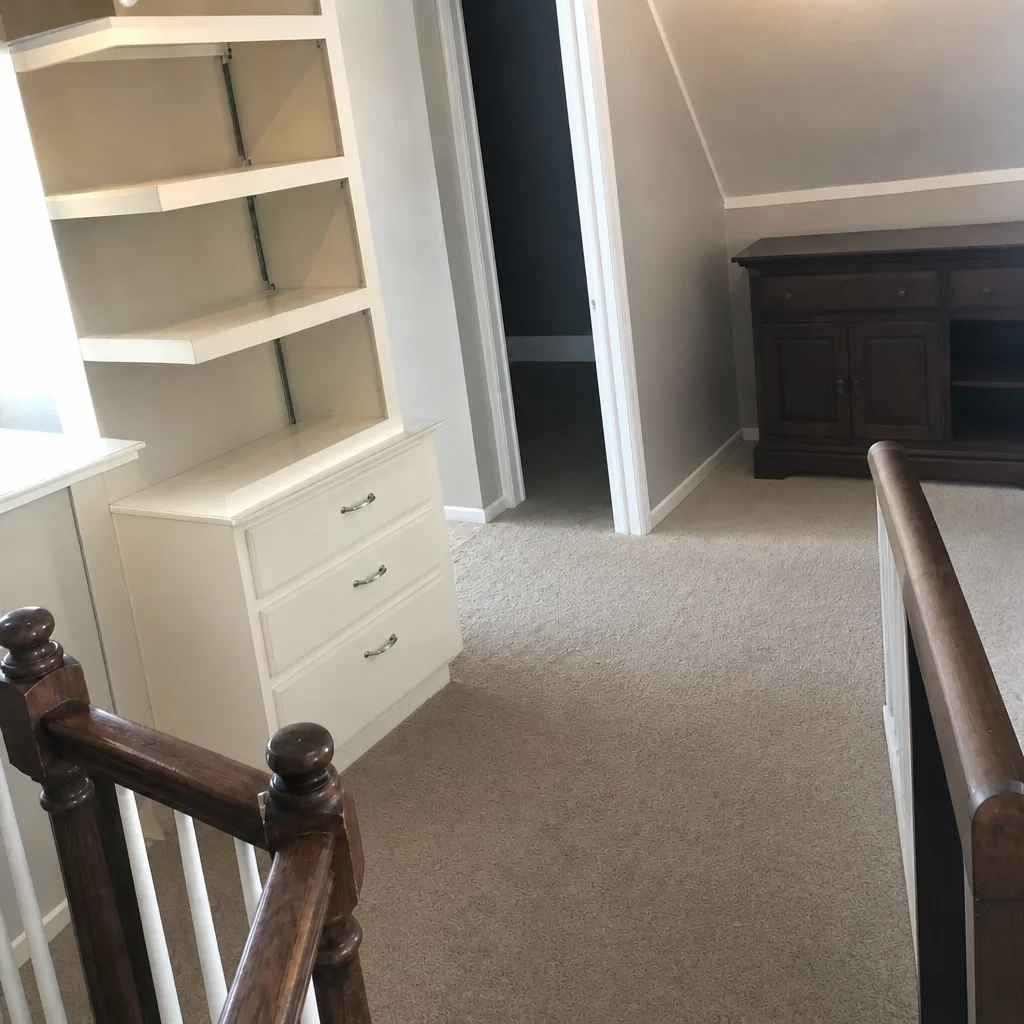 After
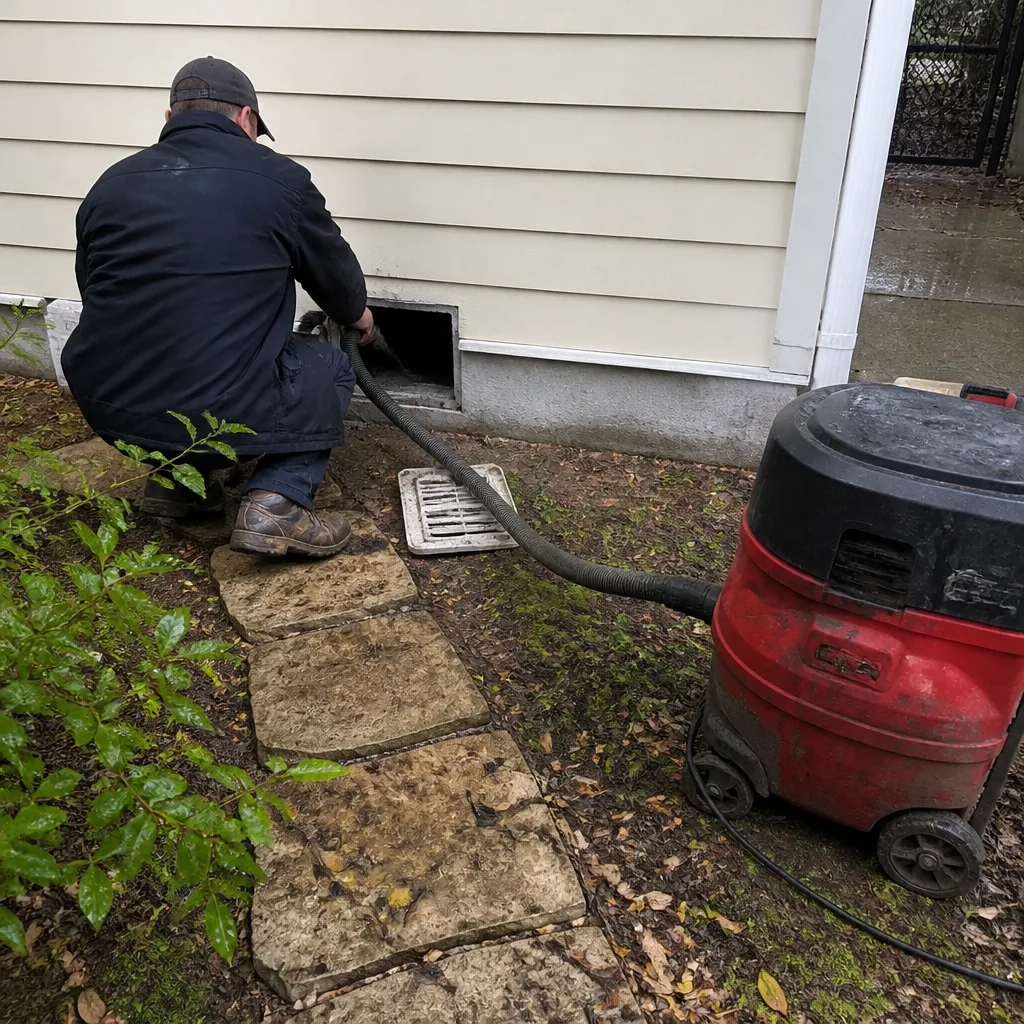 Before
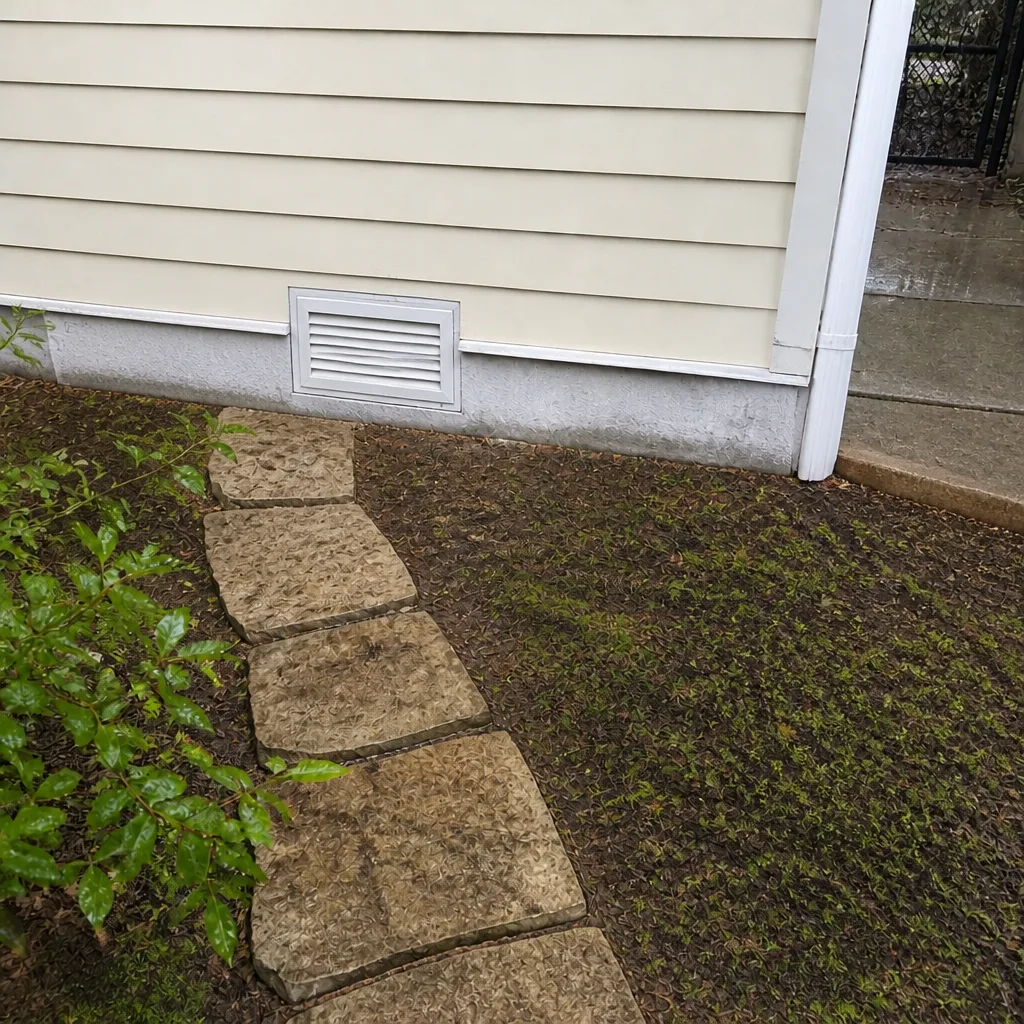 After
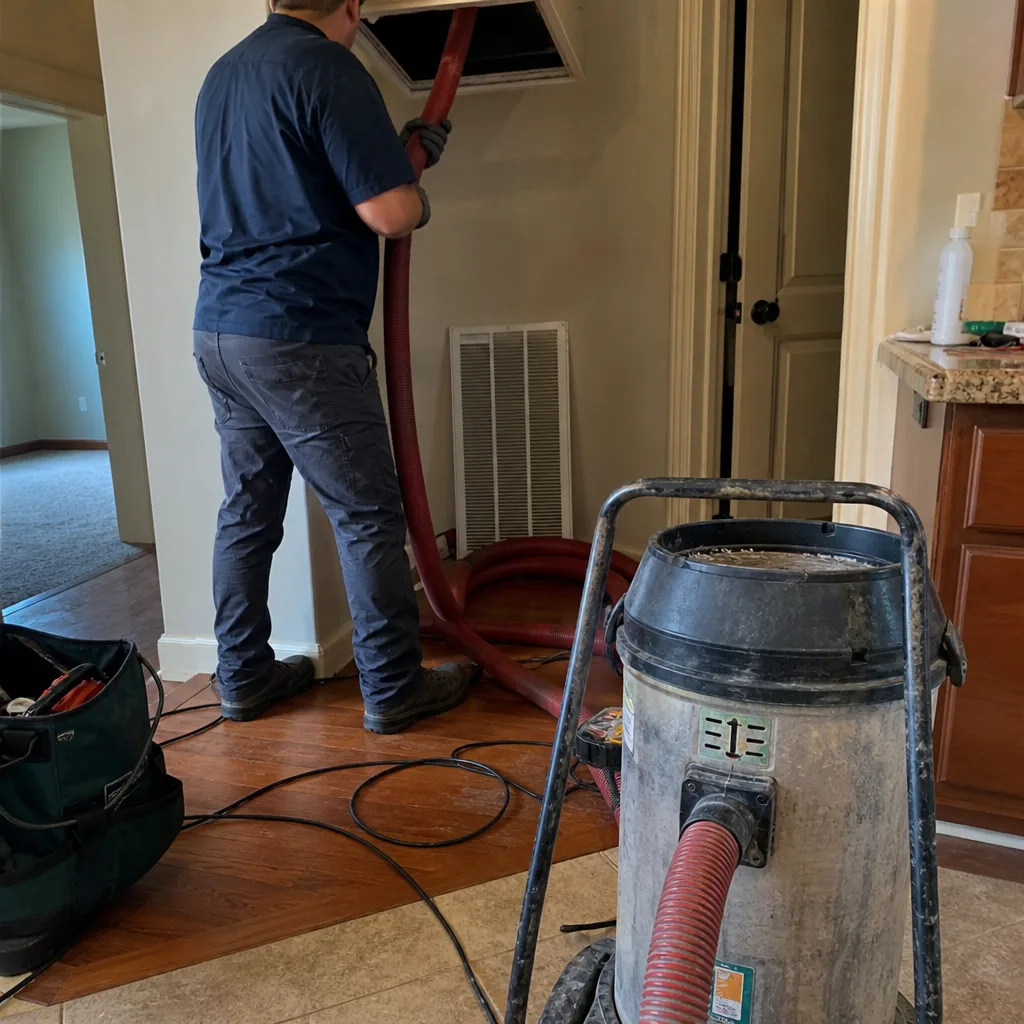 Before
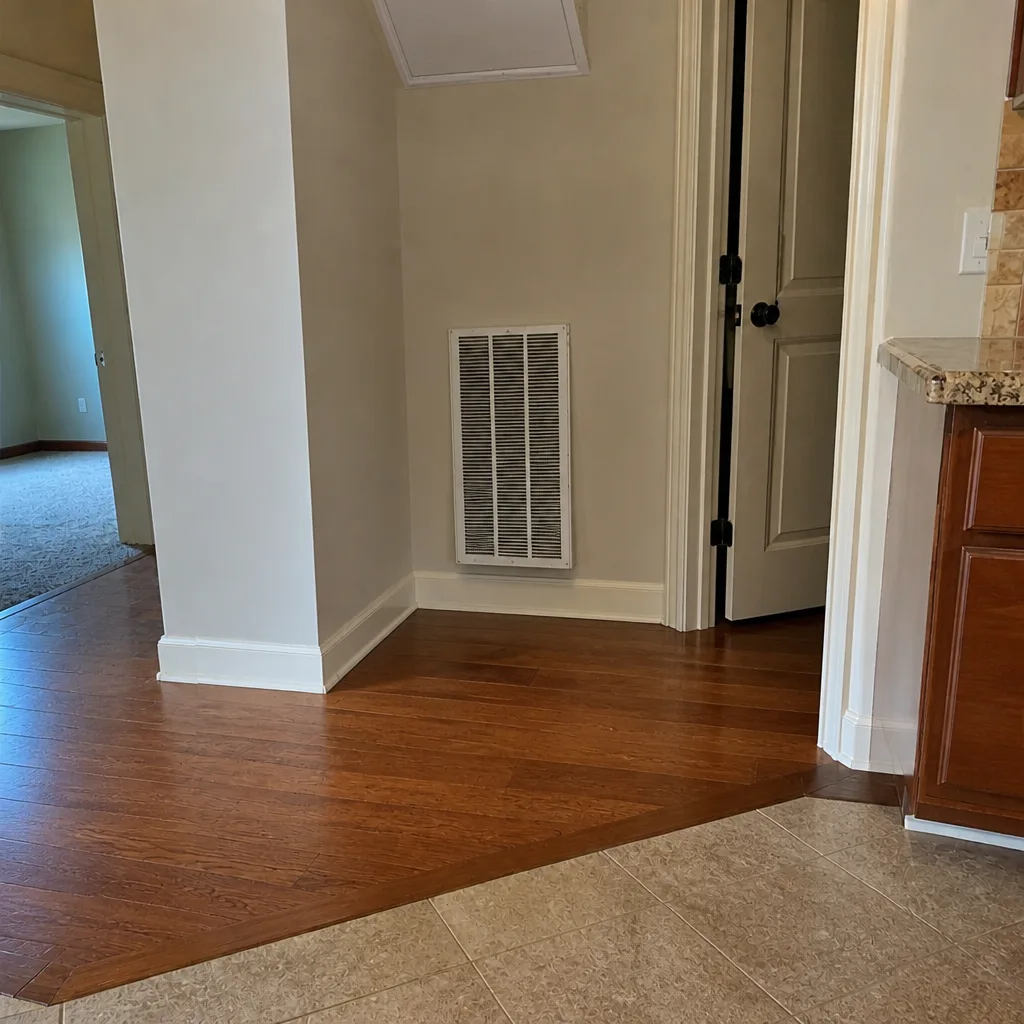 After
When to Call a Professional
Call a professional when the condition is beyond surface cleaning: visible mold inside the duct or on the air handler coil, vermin evidence, post-renovation debris, a collapsed flex run, or a full system that hasn’t been cleaned in a decade. Call also when airflow is materially uneven between rooms, when a persistent smell returns every time the fan runs, or when you simply want a documented before-and-after record of what’s inside the system. Those are outside the reach of a shop vac and a brush kit, and delaying them usually means the conditions spread.
Duct Cleaning Georgetown offers free estimates in Georgetown – call (844) 560-6431. We answer 24/7, and fast dispatch from 7am to 7pm, Sunday through Friday.
Frequently Asked Questions
You can remove visible dust from register grilles, boots, and the accessible return neck, but a shop vac can’t clean the interior of the duct runs themselves. The core limitation is direction: a shop vac at a register pushes loosened material deeper into the duct rather than pulling it toward collection. Professional equipment runs a high-volume vacuum from the main trunk with rotary brushes in each branch, so loosened material travels one way – toward the capture unit. Call (844) 560-6431 for an exact quote – estimates are free.
Because every home has a different register count, run length, air handler location, and debris load, we don’t publish per-vent pricing. What we will give you is a written scope and a flat estimate per system before any work starts, so the price you agree to is the price you pay – no per-vent math, no surprises added mid-job. The written estimate is what sets the final price. Call (844) 560-6431 for yours.
Cheap quotes are usually quoting different work: register wiping, a shop vac pass on the return face, and nothing inside the branch runs. The equipment required to actually clean a residential duct system – rotary brush systems, a high-volume collection vacuum, negative-air filtration – has real overhead, and a crew that brings it has priced a different service. Before you compare numbers, compare scopes. Ask what gets brushed, what gets vacuumed, and whether before-and-after photos are included. Call (844) 560-6431 for an exact quote – estimates are free.
Ask for before-and-after photos of your own ducts, not stock images. Any duct technician can point a camera down a register boot and take pictures with flash; that documentation is one of the most useful things you’ll get out of a professional service. If a provider can’t show you images of your own system, that’s a signal to ask why. We capture before-and-after photos on every system we service. Call (844) 560-6431 to book a documented cleaning.
For most homes, every 3 to 5 years is the working interval, with shorter cycles (2-3 years) if there are pets, allergy sufferers, recent renovation, or smokers in the household. Homes with sealed ductwork, a properly matched filter, and no pets can go longer. The stronger local trigger is seasonal: if the house smells dusty in the first weeks of AC season, the duct load is high regardless of the year on the calendar. Call (844) 560-6431 – estimates are free.
Yes. We offer air duct repair as a standalone service, separate from cleaning. Reconnecting a separated flex run, replacing a crushed run, rehanging a sagging branch, and sealing plenum seams are all within scope. This is a capability most cleaning-only operators don’t provide, so a collapsed flex run can sit right where it is even after they’ve cleaned around it. Call (844) 560-6431 and describe the problem – the estimate will tell you whether you’re looking at a cleaning or a repair.
The Bottom Line
DIY duct cleaning isn’t dangerous – it’s just structurally limited by physics. A consumer vacuum at a register pushes dislodged material deeper, while a professional system pulls from the trunk so every loosened particle travels toward collection. What you can correctly do yourself: remove and wash every register cover, wipe down register boots, change filters, and do a thorough visual inspection with your phone camera. What that work earns you is a documented scope of work to hand a professional so the conversation starts on solid ground. What it can’t reach is the interior of the branch runs, the return trunk, and the air handler – that’s the territory of rotary brush systems, high-volume collection, and negative-air containment.
If you’ve completed the DIY inspection and you’re ready to compare that scope against a professional one, we’re ready to walk through it with you. Duct Cleaning Georgetown provides air duct cleaning, dryer vent cleaning, and air duct repair as one accountable service. Our technicians have up to experience, and we operate Rotobrush, Nikro, and Abatement Technologies equipment on every air duct cleaning job because capture – not just agitation – is what actually removes debris from a system. Call (844) 560-6431 for a free estimate. We answer 24/7, and fast dispatch from 7am to 7pm, Sunday through Friday. If you need to reach us outside dispatch hours, a call is booked into the next opening, Sunday through Friday, 7am to 7pm.
Written by the team at Duct Cleaning Georgetown.