
Last updated November 16, 2026
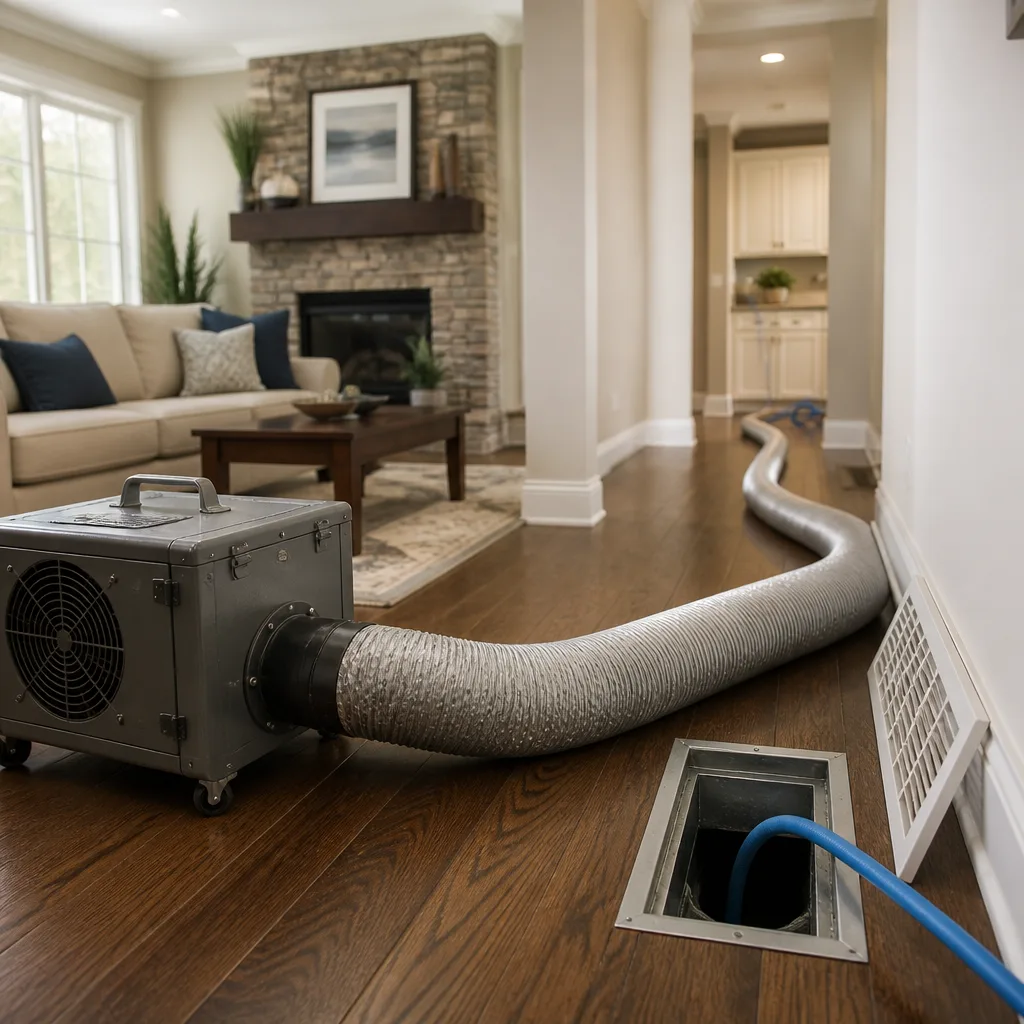 Whole-home duct cleaning
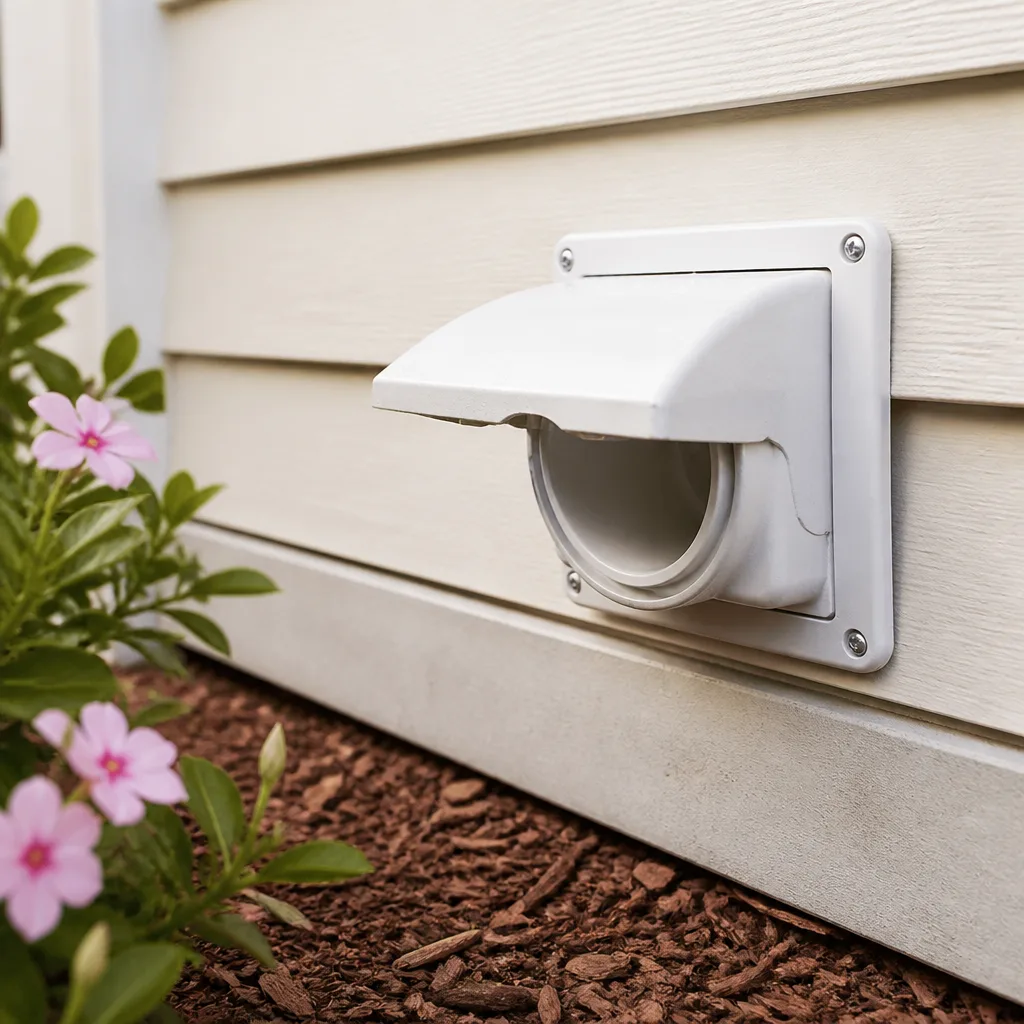 Dryer vent cleaning
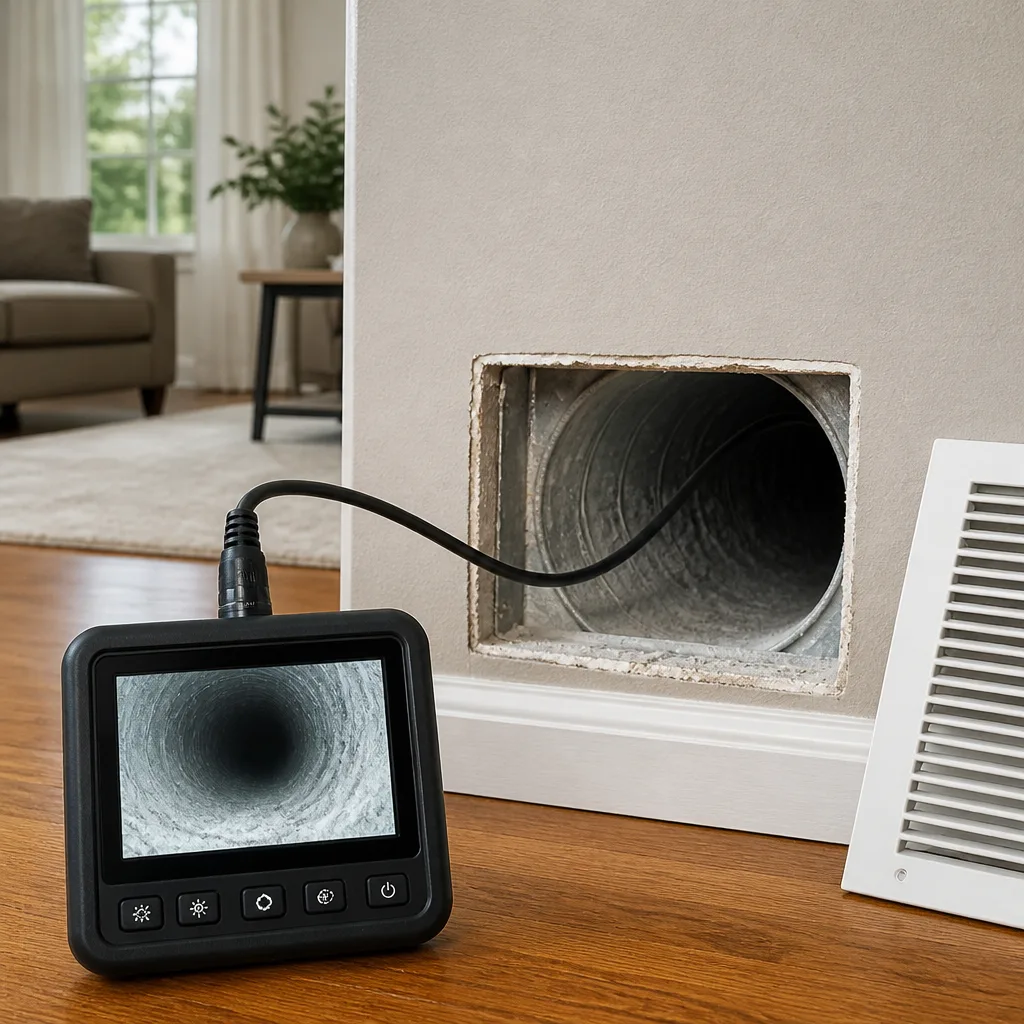 Camera inspection
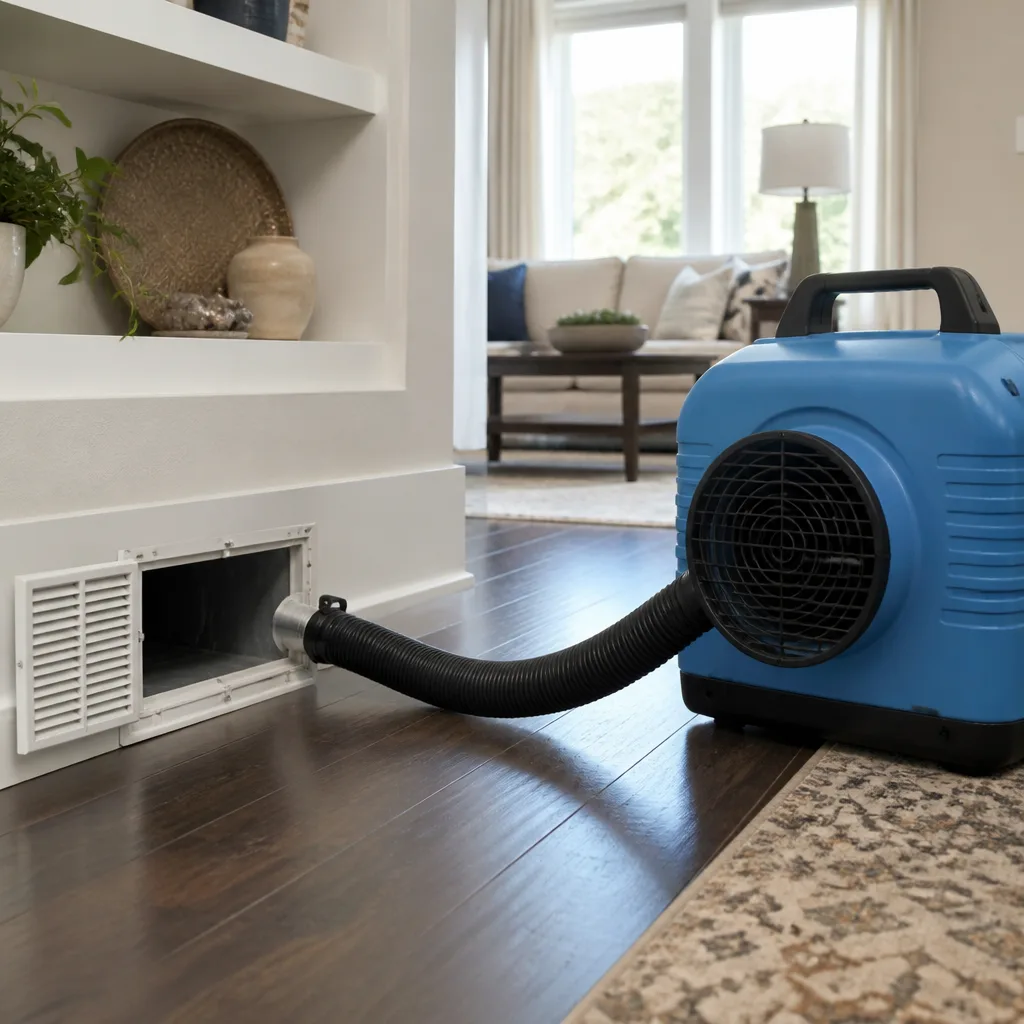 Sanitizing & deodorizing
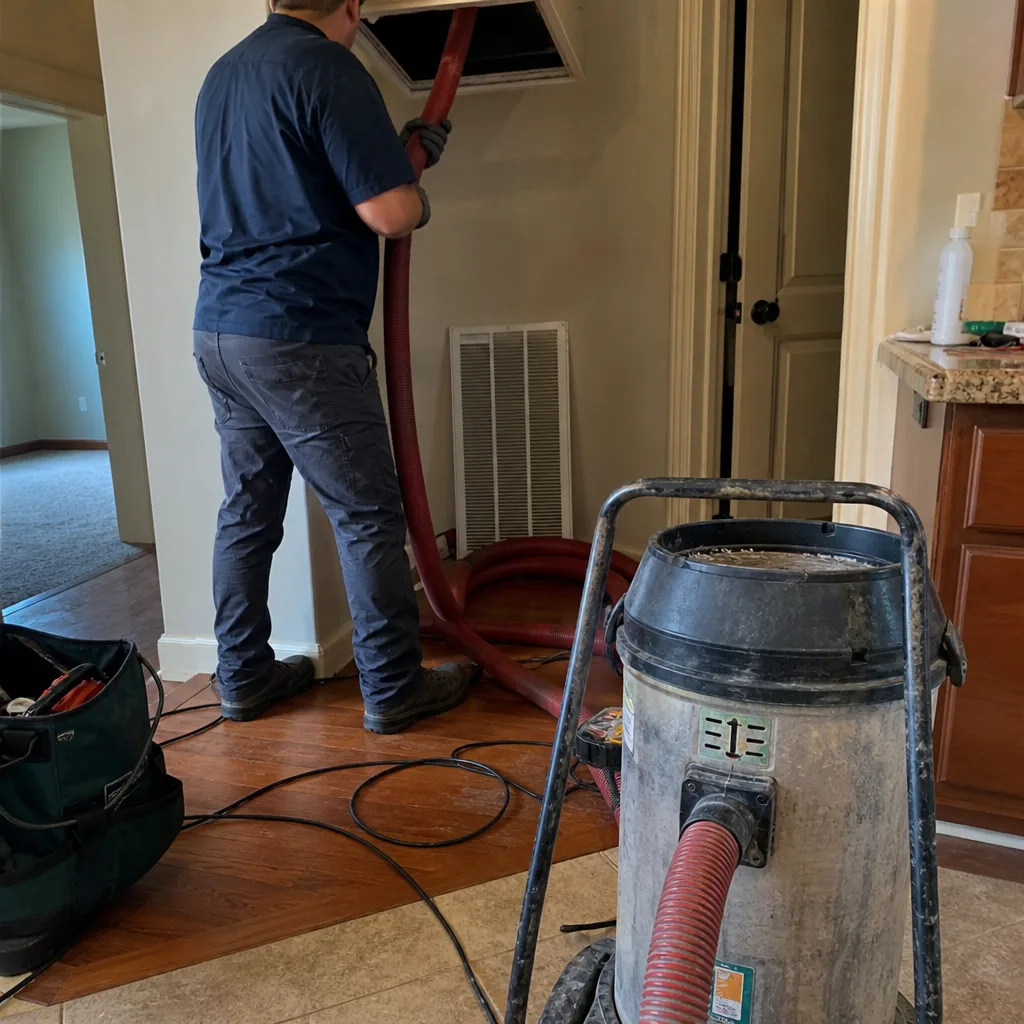
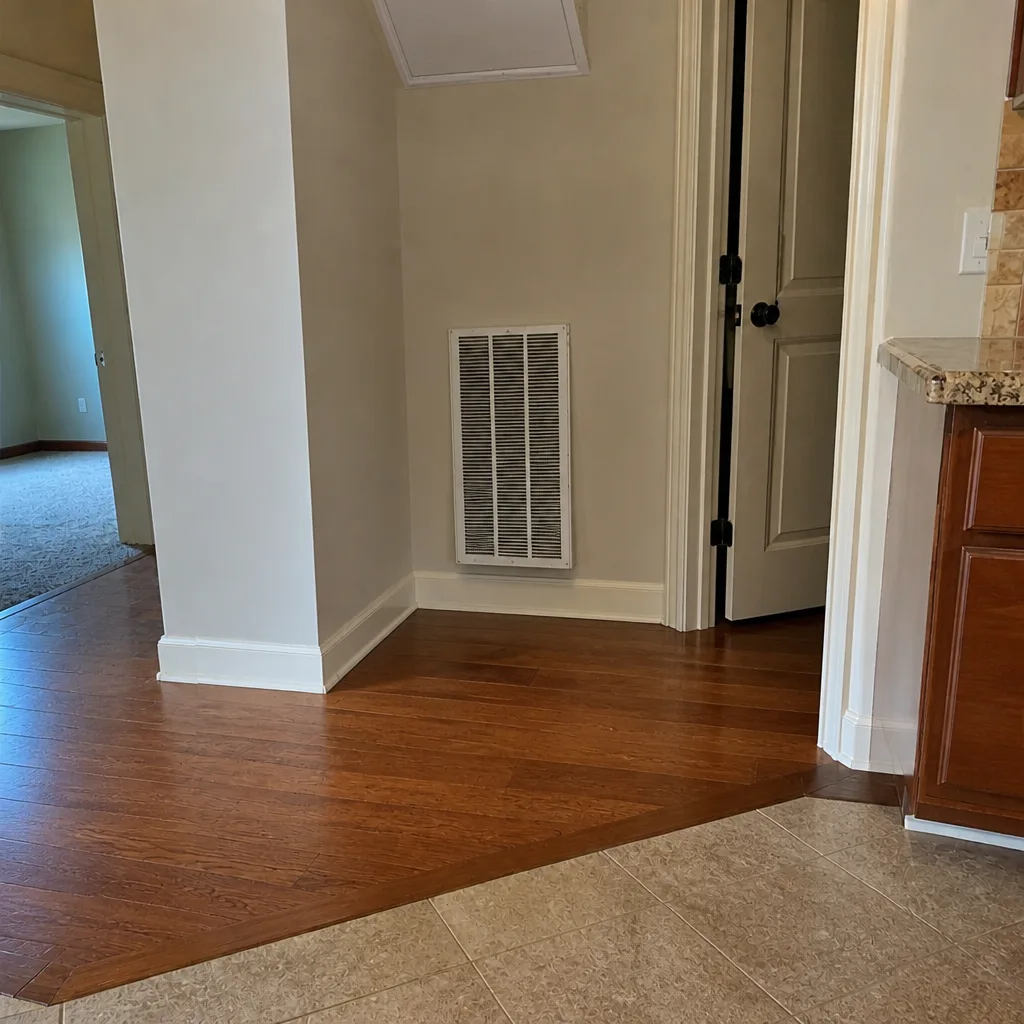
Whole-system duct and dryer vent check with before-and-after photos - you see exactly what came out of your vents
That "$99 whole-house special" is a bait ad - the real number appears once they are in your hallway, or the "clean" is a shop-vac at the register. We photograph the inside of your ducts before and after instead.
Air Duct Cleaning Maintenance Schedule: What to Do and When
The 3-to-5-year cleaning interval printed on most HVAC maintenance cards was written for a generic house with no pets, no allergies, no renovation work, and an air handler that never runs hard through humid months. That describes almost no home in Georgetown. Cedar pollen loads the return side of a system here faster than almost anything else, and one roof replacement or new puppy can undo a recent cleaning in a single season. This guide replaces the calendar rule with a condition-based schedule: what triggers a cleaning, what resets the clock, what to check between visits, and how to know when your ducts actually need attention in Georgetown.
Quick Answer
There’s no universal air duct cleaning schedule. Most Georgetown homes fall somewhere between every 2 and every 5 years depending on pets, allergies, renovation dust, and how hard the system runs. What matters more than the number of years is a set of triggers – a new pet, a renovation, a coil replacement, visible dust at the registers, or a measurable drop in airflow – that reset the cleaning clock regardless of elapsed time. Filters should be checked monthly, the dryer vent cleaned at least once a year, and duct condition reassessed each time the HVAC technician takes a static pressure reading at the annual tune-up.
Styles & brands we work with
- Whole-home duct cleaning
- Dryer vent cleaning
- Camera inspection
- Sanitizing & deodorizing
Table of Contents
- Why a Calendar Rule Fails in Georgetown
- The Condition-Based Trigger Matrix
- Cedar Fever Season and Your Duct System
- The Dryer Vent on the Same Schedule
- Tracking Duct Condition Between Visits
- The First 12 Months After a Cleaning
- Why Whole-System Thinking Beats Surface Cleaning
- A Year at a Glance: The Annual Duct Checklist
Why a Calendar Rule Fails in Georgetown
A 3-to-5-year interval assumes a generic house in a generic climate. Georgetown isn’t generic. Central Texas has long cooling seasons, heavy pollen loads in late winter and early spring, and stretches of high humidity that keep the air handler moving a lot of air through the same plenum and branch runs every day. The more air that moves, the more particulate lands on the duct walls.
Here’s what the calendar rule quietly assumes and what’s actually true:
- No pets. Pet dander and hair coat the return side of a system fast. One dog can push a 5-year schedule down to 2 years.
- No renovation. Drywall dust, insulation fiber, and sawdust from one kitchen or bathroom remodel can settle deeper than years of normal use.
- No allergies in the household. If anyone in the house reacts to dust or pollen, the tolerance for debris in the ducts is far lower.
- Duct material doesn’t matter. It does. Sheet metal, flex duct, and ductboard each collect and hold debris differently, and flex duct with sagging runs traps more than a smooth plenum.
- Dust stays put. It doesn’t. Debris lifts back into the airstream any time airflow increases, which is why a dirty return can dust a clean room within a day.
Our approach to air duct cleaning starts with inspection, not a preset interval. That’s the honest way to answer “how often” for any specific Georgetown home: measure the conditions, then decide.
The Condition-Based Trigger Matrix
A trigger is an event or a measurement that resets the cleaning clock. If any of these happens, don’t wait for the calendar – schedule an inspection. Most of them are visible or audible from inside the house.
Events that reset the clock
- A new pet. A dog or cat in a previously pet-free house can change the cleaning interval meaningfully. A first visit within 12 months of a new pet tells you how fast your system accumulates debris.
- Roof replacement or major renovation. Shingle grit, drywall dust, and sawdust get drawn into the return within days of work starting. Schedule cleaning after the dust settles, not before.
- HVAC coil or air handler replacement. New equipment meets old ducts. If the ducts weren’t cleaned during the swap, clean them after so the new coil isn’t filtering the old system’s debris.
- Water intrusion. Any leak into a duct, plenum, or air handler adds moisture, which creates a different problem than dry dust. Have the affected section inspected promptly rather than waiting for a scheduled cleaning.
- Moving into a new home. You don’t know the previous owner’s cleaning habits. Treat the first year as an inspection year.
- Persistent musty or stale smell when the system starts. That’s a sign the ducts or plenum are holding something that should be investigated.
Measurements that reset the clock
- Static pressure creeping up. Your HVAC technician’s annual reading is the single most useful objective number you have. Rising pressure on a clean filter points to a restriction somewhere in the duct system.
- Reduced airflow at specific registers. One weak register usually means a problem in that branch, not the whole system.
- Visible debris at the supply registers. If you can see it at the vent, it’s in the duct.
- Dust settling on surfaces within days of cleaning the house. Ongoing surface dust can come from anywhere, but a dusty return side is a common contributor.
Every one of those triggers is a reason to inspect – not a reason to assume a full cleaning is needed. We inspect first and recommend based on what we find, which is why we spend the time on it before we bring any equipment into the house.
Cedar Fever Season and Your Duct System
Mountain cedar (Ashe juniper) releases pollen from December through February in Central Texas, and Georgetown sits squarely inside that season. Cedar pollen behaves differently from typical indoor dust. It’s fine, it travels on wind for miles, and it gets pulled into the return system in volume when the heat runs through the same months. That combination means the duct system sees its heaviest allergen loading right when most people are turning the heat on for the first time in months.
What that means for a maintenance schedule:
- Inspect filters before cedar season, not after. Late November is the right time to check filter condition. A filter that’s already loading going into December will fail early during the highest pollen weeks.
- Consider a higher-grade filter for the season. A MERV 11 to MERV 13 filter will capture finer particles than a basic MERV 8, and it’s a reasonable swap for December through February if your system can handle the added restriction. Check the pressure drop with the HVAC technician if you’re unsure.
- Add a duct inspection to the late-winter to-do list. Once cedar season ends, that’s a good moment to look at the return plenum and a sample of branch runs to see how much has settled.
- Whole-home air quality components deserve attention too. If your system includes a Duct Cleaning Georgetown service visit around February or March, have the technician also assess how the Honeywell or Aprilaire components are performing alongside the ducts.
The goal isn’t fear about pollen. It’s timing. Cleaning in March catches what December through February deposited, and it leaves the system in its cleanest state going into spring allergies and cooling season.
The Dryer Vent on the Same Schedule
The dryer vent is the one duct many homeowners never think about until it’s a problem, and it’s the one with real safety stakes. Lint accumulation inside the vent line restricts airflow, overheats the dryer, and contributes to residential structure fires. A dryer vent isn’t optional maintenance; it’s a risk item that belongs on the same schedule you keep for the rest of the system.
How to schedule it:
- Clean the vent at least once a year. That’s the baseline for a typical household. A big family doing daily loads, or a vent with a long or convoluted run, should be inspected more often.
- Clean immediately after moving in. You don’t know the last time the previous owner had it done, and it’s a cheap five-minute inspection to pull the exterior hood and look.
- Watch for warning signs between cleanings. Clothes taking longer than usual to dry, the dryer feeling hot to the touch, or a burning smell during use all mean stop and inspect.
- Check the exterior flapper every few months. A flapper that’s stuck open or clogged with lint is a quick visual check you can do yourself from outside the house.
- Don’t rely on a shop vac to clear the whole line. Rodent nests, compacted lint, and long horizontal runs need rotary tooling and proper vacuum extraction to clear fully.
Our dryer vent cleaning service treats the dryer vent as a fire-safety item, not an upsell. It runs on the same visit schedule as the rest of the system, and it’s the one line item we recommend never skipping more than a year.
Tracking Duct Condition Between Visits
Static pressure is the measurement that turns “how often should I clean my ducts” from a guessing game into something you can track. It measures the resistance inside the duct system, and your HVAC technician already takes it during annual tune-ups. Ask for the number.
Here’s what the reading tells you:
- Stable reading over time. Your duct system is holding its condition. Keep doing what you’re doing.
- Reading creeping up slowly. Rising static pressure with a clean filter often points to duct debris, a partially closed damper, or flex duct that’s sagged and restricted airflow.
- Reading up sharply after a renovation. That’s the renovation dust talking. This is the moment to schedule an inspection rather than wait.
- High reading with poor airflow across the house. A sign of a restriction serious enough to be checked, possibly by video inspection of the duct runs.
Ask the technician to write the number down each year and keep it with the maintenance record. Even a rough trend line is worth more than no measurement at all.
While we’re talking about the rest of the system, ducts often fail in ways that look like cleaning problems but are actually duct problems. Loose joints, gaps at the plenum, separated flex duct runs, and register boots that don’t seal – all of these leak air and dust into the wrong places. We repair what other crews clean around. That’s the reason duct repair is a standalone service rather than something we fold into a cleaning quote as an afterthought.
The First 12 Months After a Cleaning
What you do right after a cleaning determines whether the results hold for two years or five. The system is at its cleanest baseline the day the work is finished. Here’s the schedule that keeps it there.
Filters – month by month
Check the filter once a month. That’s not an exaggeration based on climatic conditions; it’s simply how filter maintenance works. A basic 1-inch filter under constant load can load in 30 to 60 days, and running a loaded filter through a Texas summer puts strain on the blower and the coil. Replacement grade matters too:
- MERV 8 – reasonable baseline for most homes without allergy concerns.
- MERV 11 to MERV 13 – a step up for allergy-sensitive households and for the cedar season months. Confirm with your HVAC technician that the higher restriction is safe for your blower and duct system.
- Beyond MERV 13 – usually a bad move for residential systems without a blower rated for it. Over-restriction is a real problem.
- 4-inch and 5-inch media filters – last longer, but still check monthly. The longer interval doesn’t mean “set and forget.”
Humidity – the target range
Central Texas humidity swings hard. Indoor relative humidity in the 40 to 50 percent range is where the system performs best and where ducts are least likely to hold moisture. In the summer, the air conditioner naturally dehumidifies. In spring and fall, humidity can climb with the system running less. If your home has a whole-home dehumidifier, Honeywell makes components common in this region; Aprilaire is a frequent name for humidification. Either way, have the component assessed during the annual tune-up rather than leaving it dormant.
Register inspection cadence
- Monthly. Shine a flashlight into the supply registers you can easily reach. Visible dust on the duct wall inside the boot is either normal settle or a sign the ducts need attention. Look for gross buildup, not specks.
- Quarterly. Check the return grille for debris accumulation. A return that’s already loading within a few months of a cleaning is pulling in something it shouldn’t.
- Annually. Follow up on the static pressure reading from the HVAC service. Compare with the reading from the previous year.
- After any trigger event. Re-inspection, not a full cleaning, at least at first.
Duct repair follow-through
If the cleaning visit included duct repair – sealed joints, replaced flex runs, reconnected boots – the 12 months after are the check-in window. Confirm those repairs are holding up. Leaks at joints fail slowly, and the symptom is usually reduced airflow or dust near a register, not an obvious failure.
Why Whole-System Thinking Beats Surface Cleaning
Any duct cleaning schedule falls apart if the work done on the day only touches the surface. Surface cleaning means a shop vac dragged to the registers and a coupon price attached to it. Whole-system cleaning means rotary brushing the duct walls, containing the debris so it doesn’t redistribute into the house, and inspecting every accessible component of the system including the air handler and coil. Those are two different jobs with the same name.
The tools matter because the results differ. We run Rotobrush rotary-brush systems on every air duct cleaning – the same equipment specified in professional HVAC remediation standards. We pull with Nikro vacuum and collection equipment so the debris comes out contained. We also deploy Abatement Technologies negative-air filtration during service so living spaces stay protected instead of dusted with the contents of the ducts. That’s contractor-grade equipment in a residential setting, and it’s why a cleaning holds up over years rather than weeks.
Where cleaning ends and repair begins depends on what the inspection finds. If a home in the Sun City or Wolf Ranch areas has duct runs that leak at the plenum, cleaning them without sealing the leak just means re-dirtying them faster. We work on the system, not just the surface. For anyone taking a whole-system approach to their Georgetown home, that distinction decides whether the schedule you build actually holds.
A Year at a Glance: The Annual Duct Checklist
Here’s the schedule we recommend most Georgetown homeowners keep, laid out month by month. Adjust to your triggers.
January – February
- Filter check weekly during cedar season. Cedar pollen loads the return side of the system faster than at any other time of year.
- Watch for dust on surfaces you hadn’t seen before.
- Don’t schedule a full cleaning mid-season unless you have a specific reason. Cleaning in March catches what cedar season deposited.
March
- Best window for a full duct inspection in Georgetown. Cedar season is over and cooling season is not yet running hard.
- If the fall inspection flagged debris or repair needs, this is when to book the actual cleaning.
April – May
- Filter check monthly.
- Register inspection – look inside each supply boot with a flashlight.
- Exterior dryer vent flapper check.
June – August
- HVAC tune-up – ask for the static pressure reading and write it down.
- Humidity check – indoor relative humidity should stay in the 40 to 50 percent range.
- Filter check monthly, possibly more often in a household with heavy filter loading.
September – October
- Filter check monthly.
- If you’ve had a renovation, roof replacement, or water intrusion during the year, this is when to schedule the inspection that closes it out.
- Duct repair follow-up if repairs were done in the past 12 months.
November – December
- Pre-cedar-season filter swap if you’re using a seasonal higher-grade filter.
- Duct inspection scheduled for early spring.
- Dryer vent cleaning – annually at minimum, more often if the household is large or the vent line is long.
Common Mistakes to Avoid
- Following a calendar without checking conditions. A 5-year interval on a house with two dogs and a recent roof replacement misses the actual need by years. Read your triggers before you read the calendar.
- Skipping the dryer vent. It’s the duct that’s most likely to be neglected and the one with the highest safety stakes. Getting it on the annual schedule before it becomes a problem is the whole point.
- Cleaning without inspecting the ducts first. If a plenum is leaking or a flex run is torn, cleaning it just means re-dirtying a clean system. Inspection before cleaning, every time.
- Buying the highest-MERV filter available. Over-restriction strains the blower and reduces airflow across the coil. MERV 11 to MERV 13 is the realistic ceiling for most homes; beyond that, check with your HVAC technician first.
- Ignoring a one-register airflow complaint. A weak supply register usually means a specific branch problem, not a whole-system cleaning. The fix is a targeted inspection, not a cleaning quote.
- Treating duct repair as a separate project to handle “later.” Every month a leak goes unsealed is more dust pulled into the return side and more cleaning wasted. Repair the system before the cleaning is due again, not after.
- Assuming a shop vac and a nozzle clears the dryer vent. Long horizontal runs, interior lint compaction, and rodent nests need rotary equipment to clear fully. Doing it by hand often clears the visible part only.
See the difference
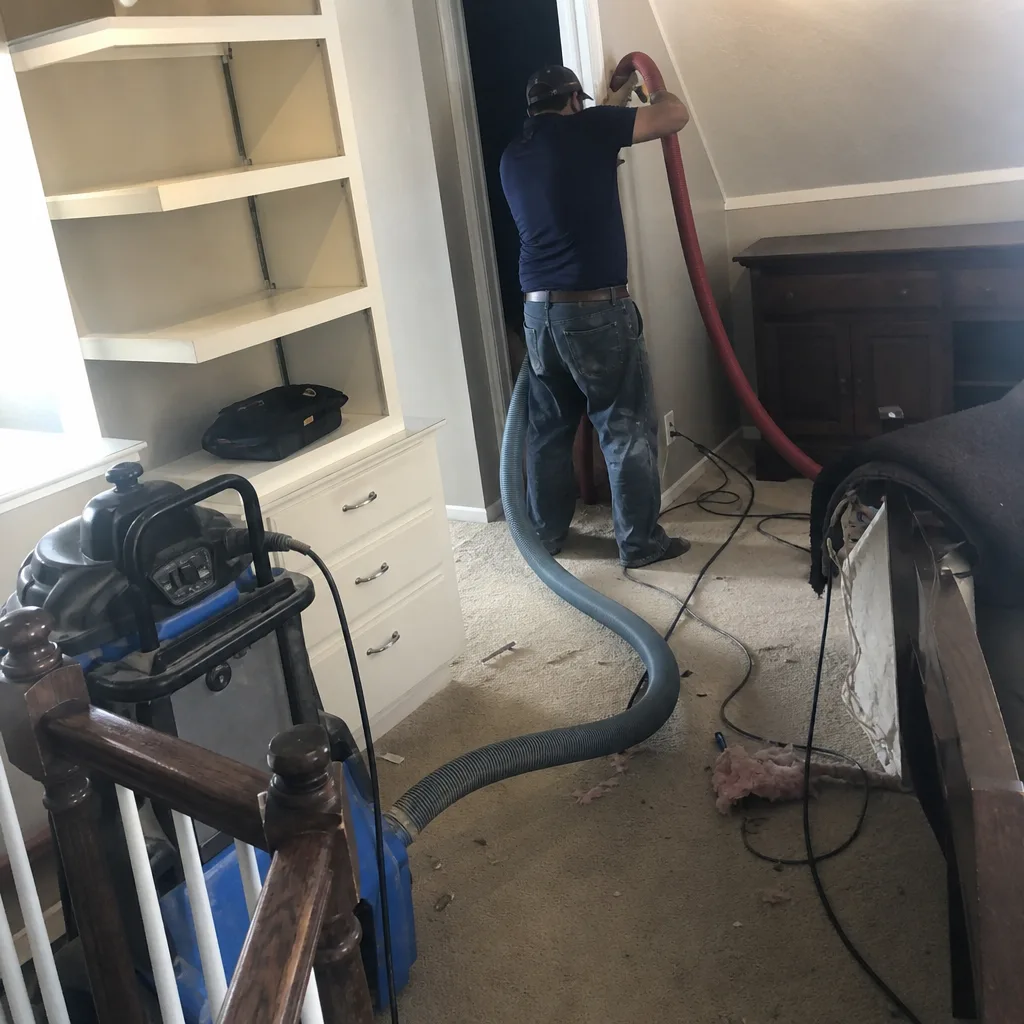 Before
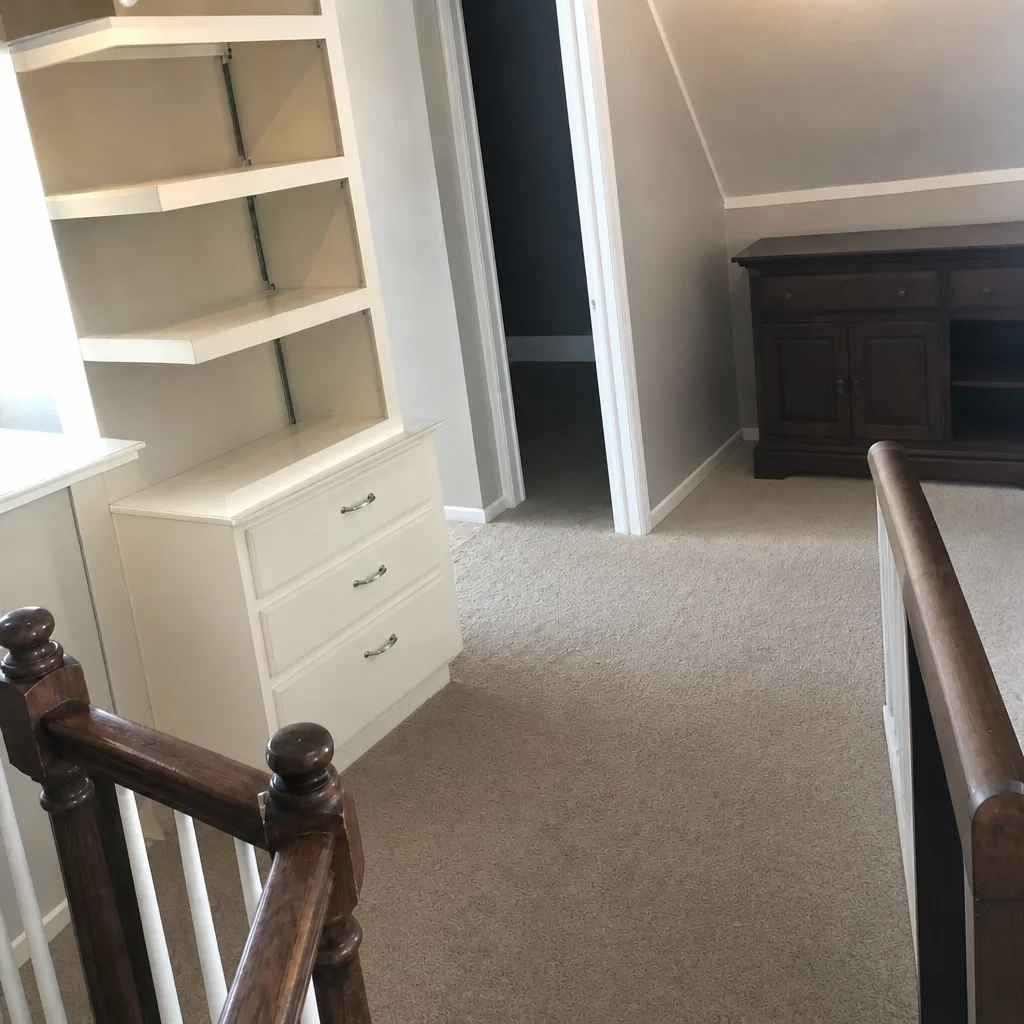 After
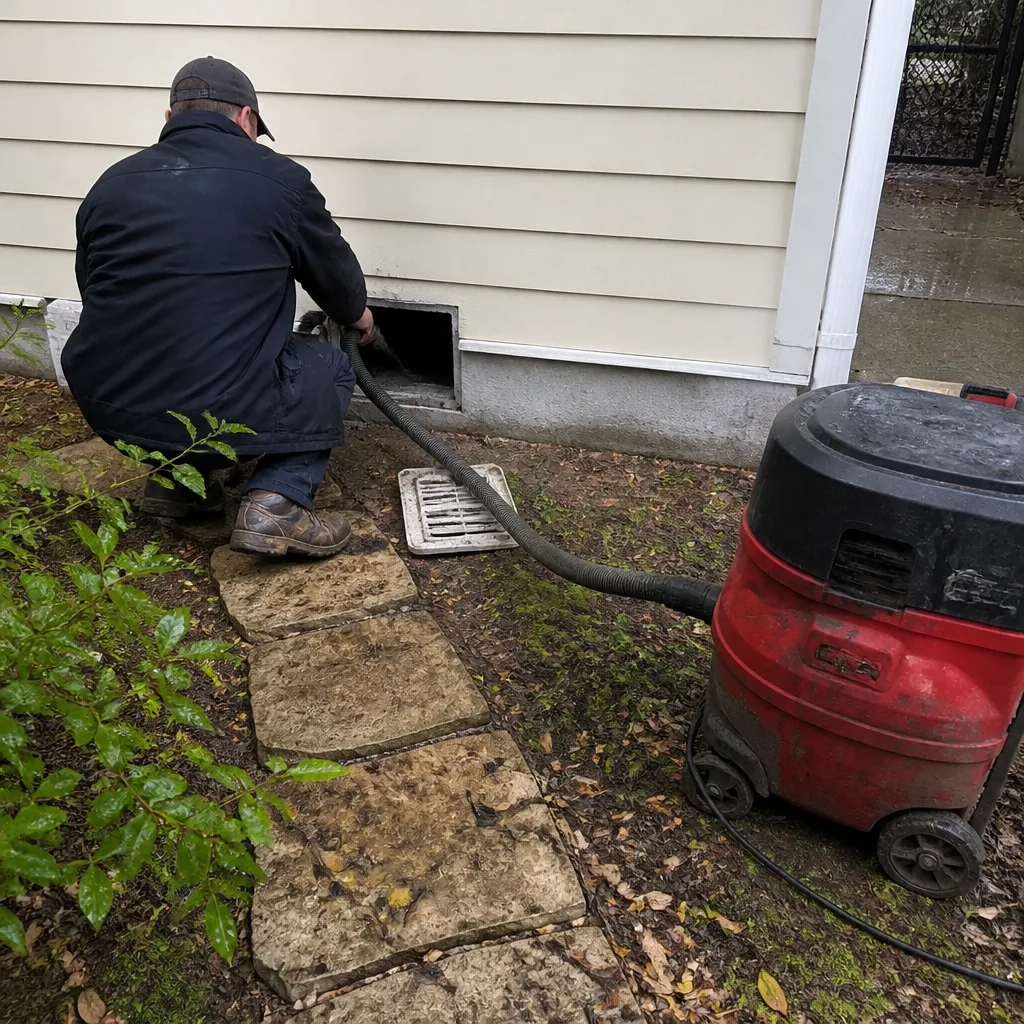 Before
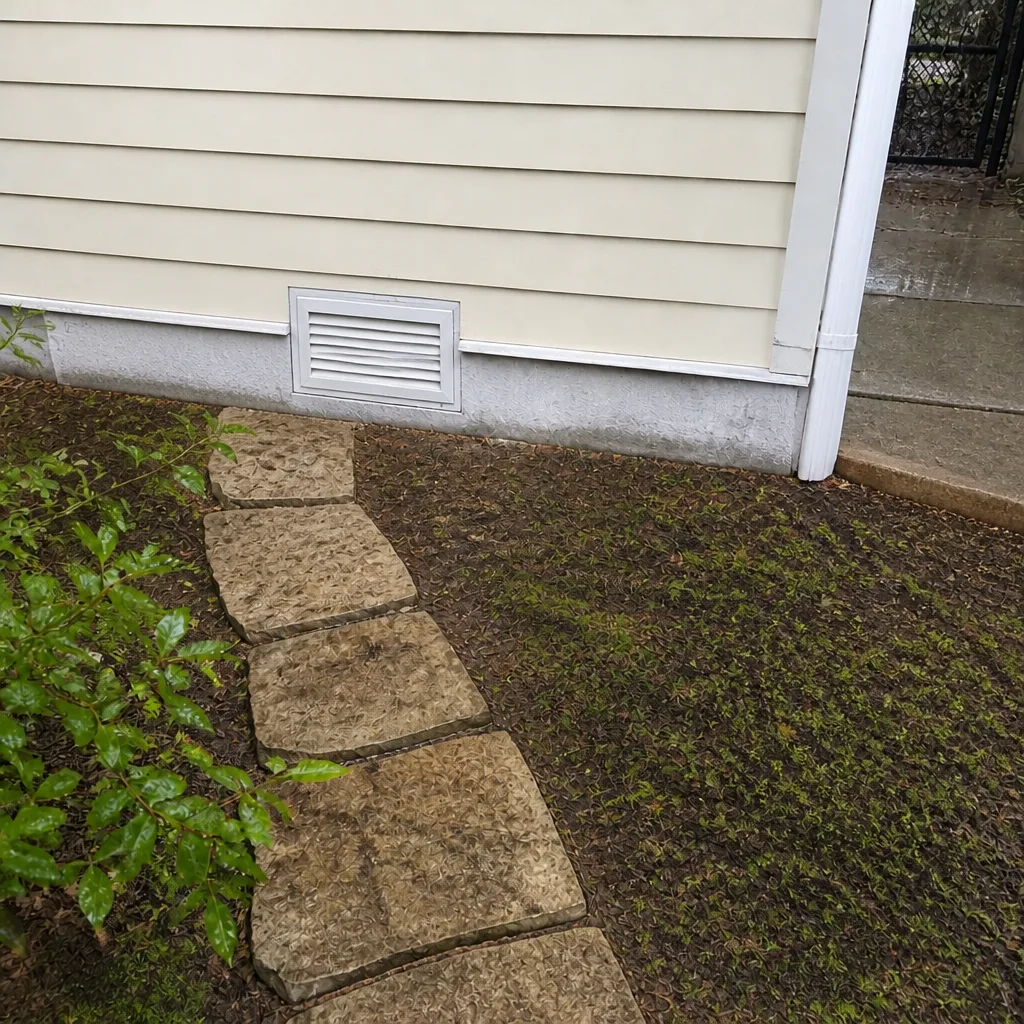 After
 Before
 After
When to Call a Professional
Some jobs are obvious – a full cleaning when the ducts haven’t been serviced in years, or a dryer vent that’s never been cleaned since you moved in. Others are more subtle. Call us when you notice visible dust accumulating at the supply registers, when a recently cleaned house has dust on surfaces within a week, when the system has a musty smell on startup, when static pressure readings are climbing, when the household has pets or allergy-sensitive members and the ducts haven’t been serviced in more than 3 years, or whenever a renovation, roof replacement, coil replacement, water intrusion, or new pet has reset your cleaning clock. We also get called when a duct is visibly disconnected or when a register is returning air instead of supplying it – those are repair issues, not cleaning issues, and we treat them that way. Duct Cleaning Georgetown offers free estimates in Georgetown and can assess the system without pulling the trigger on a cleaning visit you don’t need.
If the trigger is only one register or one branch, the visit that follows is an inspection, not a full cleaning. We’d rather tell you it isn’t time yet than oversell a service that isn’t warranted.
Frequently Asked Questions
Most Georgetown homes need duct cleaning every 2 to 5 years, driven by the conditions we’ve covered in this guide – pets, allergies, renovation dust, cedar pollen loading, and duct material – rather than by a fixed calendar interval. Trigger events like a new pet, roof replacement, coil replacement, or water intrusion reset the clock regardless of when the last cleaning was. Call (844) 560-6431 for an inspection-based estimate.
Yes. Mountain cedar releases pollen from December through February in Central Texas, and that fine pollen gets pulled into the return system in volume while the heater is running. It loads the filter fast and deposits on duct surfaces, which is why we recommend checking filters weekly during that window and scheduling a full inspection in March, once the season ends.
Typical air duct cleaning in Georgetown runs from around $350 to $700 for a standard whole-home system, with the final price set per job by a written estimate after we inspect. We don’t quote per-vent prices or coupon teasers because that number never reflects what the work actually involves. If a quote sounds very low, ask what tooling and containment the crew will bring before booking.
Cheap quotes usually reflect a different scope of work – a shop vac dragged to the registers, no rotary brushing, no negative-air containment during service, and no inspection of the air handler or coil. The result is a cleaning that doesn’t hold up past a few weeks, which is why the same house needs to be cleaned again far sooner. We run Rotobrush rotary-brush systems and Nikro vacuum equipment on every cleaning, and we deploy Abatement Technologies negative-air filtration so debris is contained rather than redistributed through the house.
Ask for before-and-after photos of the same duct runs, taken inside the actual ducts, plus a written description of the equipment used. On our visits, the documentation is part of the service – not something you have to ask for. If a crew can’t produce photos from inside the ducts, that’s a signal to ask more questions before booking.
The dryer vent needs cleaning at least once a year, more often in a large household or with a long vent run, while air ducts typically go longer between cleanings. Lint accumulation in the vent line is a fire risk, not just an inefficiency, so it deserves its own annual slot on the schedule. If the vent has never been cleaned since you moved in, that’s the first call to make.
Free. We inspect the system, take a look at the accessible duct runs and the air handler, and give you a written estimate only if the work is actually needed. There’s no trip charge or diagnostic fee. Call (844) 560-6431 to schedule.
The Bottom Line
A duct cleaning schedule that works in Georgetown is built on triggers and measurements, not on a printed calendar interval. Inspect the system at every trigger event – a new pet, a renovation, a coil replacement, water intrusion, a new home. Check filters monthly, clean the dryer vent annually, and write down the static pressure reading from every HVAC tune-up so you can see changes over time. Clean when the inspection says clean; repair duct leaks before they undo a good cleaning. That approach costs less over five years than a coupon cycle of cheap cleanings that don’t hold – and it leaves the system in measurably better shape than when you started.
If you’re ready for a real assessment of what your ducts actually need, call (844) 560-6431 for a free estimate. We answer 24/7. Fast dispatch from 7am to 7pm, Sunday through Friday. We’ll inspect before we quote, show you what’s inside the ducts with before-and-after photos, and give you one flat price per system agreed in writing before we begin. Contractor-grade equipment, residential pricing, and the three-service scope – air duct cleaning, dryer vent cleaning, and air duct repair – all handled under one accountable provider.
Written by the team at Duct Cleaning Georgetown.